At a hotel, restaurant or Chinese home, the default drinking water may be hot or warm. This is ordinary hospitality, not a test and not a sign that cold water is unavailable. The confusion comes from English requests such as “not hot,” which do not specify whether you want room-temperature, refrigerated or iced water.
Choose the temperature you actually want
- 热水 (Reshui): hot water
- 温水 (Wenshui): warm water
- 常温水 (Changwen shui): room-temperature water
- 冰水 (Bingshui): ice-cold or iced water, depending on context
- 去冰 (Qubing): no ice in a drink that may still be chilled
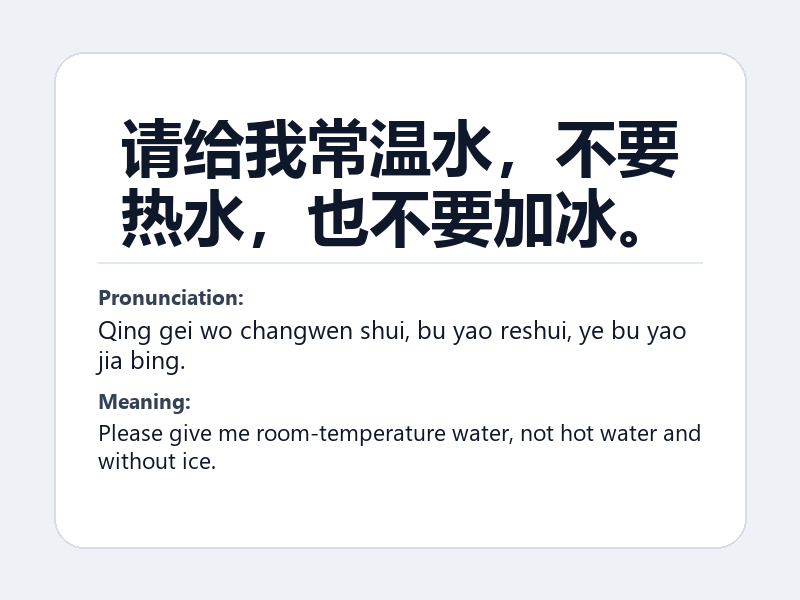
请给我常温水,不要热水,也不要加冰。
Pronunciation: Qing gei wo changwen shui, bu yao reshui, ye bu yao jia bing.
Please give me room-temperature water, not hot water and without ice.
What may arrive at a restaurant
Free water is not universal. A restaurant may provide hot water, tea, bottled water or no drink until you order. Check whether tea and bottled water are charged before opening or drinking them.
At the hotel
The electric kettle is commonly intended for boiling water. If you want cool drinking water, ask for sealed bottled water or let freshly boiled water cool in a clean container. Do not drink bathroom tap water merely because it looks clear.
When ordering a soft drink
“No ice” may produce a refrigerated drink without cubes. “Room temperature” may produce an unrefrigerated bottle. If ice itself is the concern, say 去冰; if temperature is the concern, say 常温.
FAQ
Is it rude to ask for cold water?
No. Ask clearly and accept that a small restaurant may only have hot water or bottled drinks.
Does 温水 mean room temperature?
Usually it means warm. Use 常温水 when you do not want either hot or chilled water.
Will “no ice” make a drink warm?
Not necessarily. The bottle or dispenser may already be refrigerated.
For drinking safety, see the China tap-water guide.