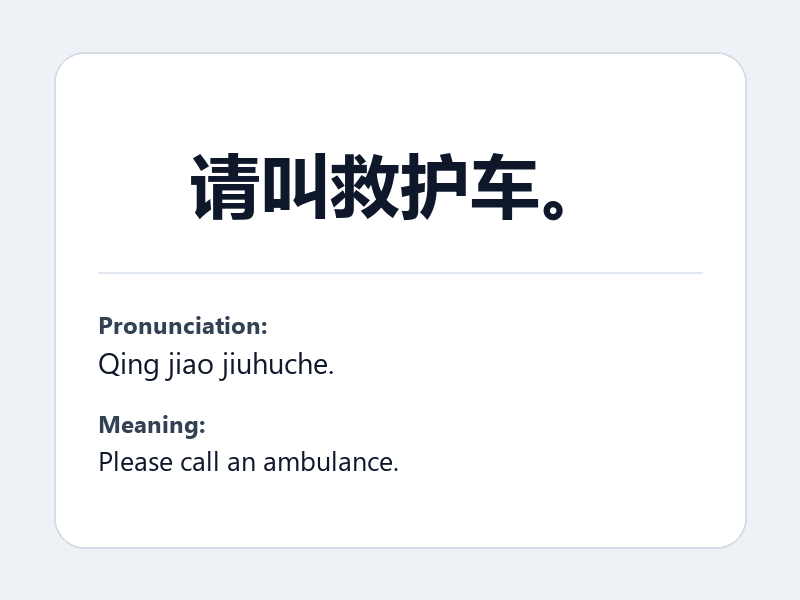
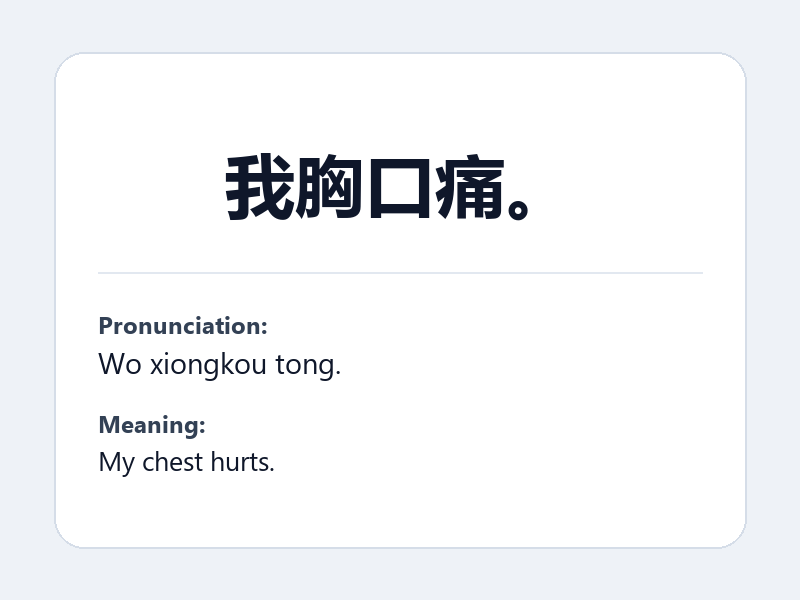
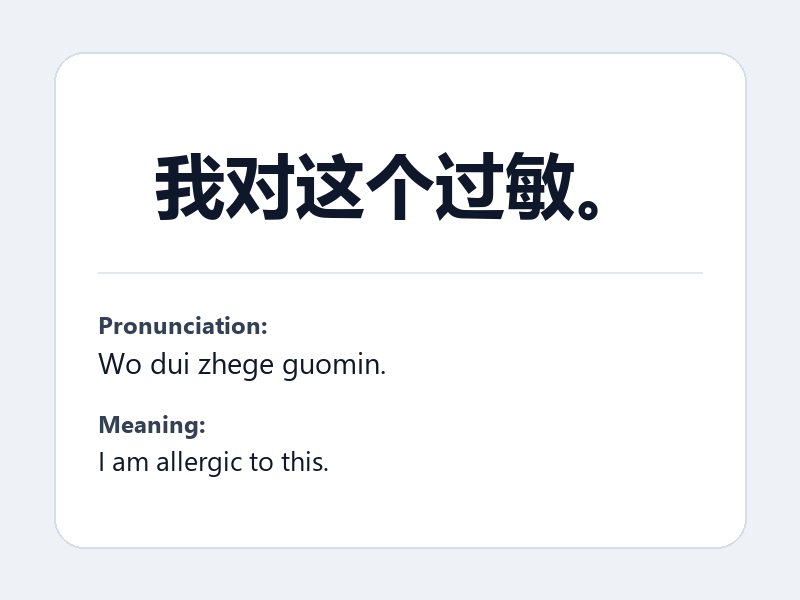
Tip: Save the phrase cards you may need before you go out. If a translation app fails, you can show the image directly to a hotel clerk, driver, cashier, restaurant staff member, or police officer.
The short version: For a serious medical emergency, call 120 or ask staff to call 120, then prepare your passport, symptoms, allergies, current medicine, insurance, and payment method.
A medical emergency abroad is frightening because you may not know the hospital system, language, or payment process. Do not try to diagnose yourself first. Get help, explain the risk, and carry the information medical staff need.
Before you react
- 120 is the ambulance number in mainland China.
- Hospitals may need passport information and payment handling. Keep documents accessible.
- Allergies and current medicines matter. Show them clearly in writing.
- Translation apps help, but staff and written notes are better during stress.
What to do before you reach the hospital
- Call 120 or ask staff to call 120.
- If you are in a hotel, ask the front desk to help coordinate.
- Show symptoms, allergies, medicine, and medical conditions in writing.
- Bring passport, phone, charger, payment method, and insurance details.
- Keep hospital documents, receipts, diagnosis notes, and prescriptions for insurance.
Prepare your medical basics before the trip
- Bring essential medicines from home in original packaging where possible.
- Write allergies, chronic conditions, blood type if known, and emergency contact in a phone note.
- Save travel insurance contact and policy number.
- Keep a backup payment method because hospitals and clinics may require payment handling.
- Know your hotel address in Chinese so staff can locate you.
Hospital mistakes to avoid
- Trying to solve serious symptoms at a pharmacy.
- Not mentioning allergies or current medication.
- Going alone if you are confused, faint, injured, or unable to communicate.
- Throwing away receipts and medical documents before insurance claims.
Medical lines worth saving
请叫救护车。
Pronunciation: Qing jiao jiuhuche.
Please call an ambulance.
我胸口痛。
Pronunciation: Wo xiongkou tong.
My chest hurts.
我对这个过敏。
Pronunciation: Wo dui zhege guomin.
I am allergic to this.
FAQ
Should I call an ambulance or take a taxi?
For serious, unclear, or worsening symptoms, call emergency help. For minor non-urgent issues, hotel staff may help you find a clinic or hospital.
Will the hospital speak English?
Some hospitals in major cities may have English support, but do not rely on it. Written symptoms and hotel assistance help.
Important: This page is a practical travel guide, not legal, police, or medical advice. In a real emergency, use local emergency services and ask hotel staff, station staff, airport staff, police, hospital staff, or your embassy/consulate for help.
Before you go out: save allergy, symptom, hospital, and insurance details. Medical conversations are the wrong place to rely on improvising.
Next: Go back to Emergency Help, or review what to do if you lose your passport or phone.