A map may say your destination is 250 metres from the station and still send you on a 15-minute walk. Large Chinese stations can have many exits spread across several blocks, and the wrong side of a wide road, railway line or fenced compound may be difficult to cross.
Choose the exit before leaving the platform area
- Open a map that shows station exits.
- Search the exact building or gate, not only the neighborhood.
- Match the recommended exit letter or number to station signs.
- Check whether the route crosses a major road after reaching the surface.
- Take a screenshot before entering a passage with weak signal.
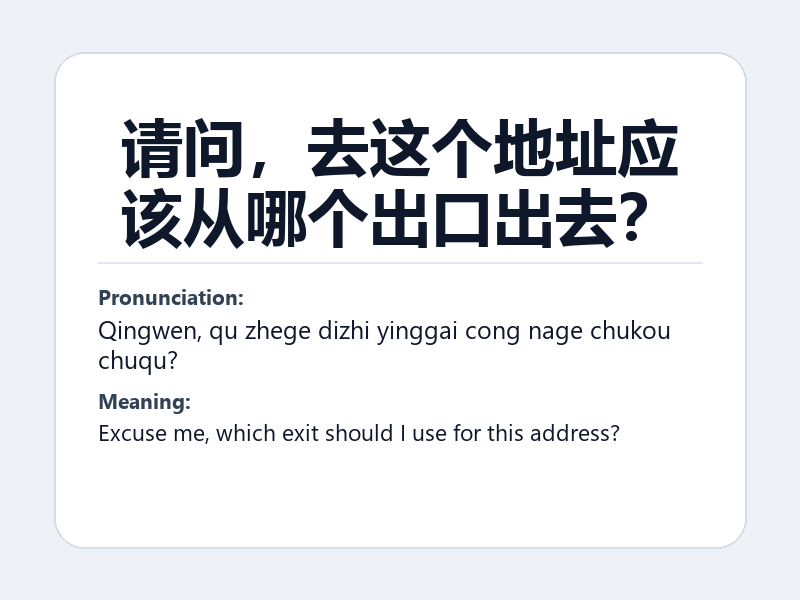
请问,去这个地址应该从哪个出口出去?
Pronunciation: Qingwen, qu zhege dizhi yinggai cong nage chukou chuqu?
Excuse me, which exit should I use for this address?
Read the landmark board
Near the concourse, exit boards list streets, hospitals, malls, government buildings and attractions. Compare the Chinese destination with your saved address. An exit called “shopping mall” may connect directly into the basement rather than the pavement.
Lifts may use a different route
The accessible lift may emerge at a different corner from the escalator marked with your preferred exit. Ask staff where the lift reaches street level and recalculate from that actual point.
If you already used the wrong exit
Do not cross fences or walk into a vehicle tunnel. Use a legal crossing, return through the station passage if allowed, or take a short surface route. If meeting a driver, update the pickup pin rather than asking them to find you at another exit.
FAQ
Are exit letters consistent across cities?
No. Some systems use letters, some numbers and some combinations. Copy the exact local label.
Can two exits have the same number?
Branches such as A1 and A2 can lead to different corners. Do not omit the final character.
Why did navigation change after I reached the street?
Indoor position is less accurate. Confirm the street name, building direction and actual exit marker before walking.
For the full journey, see how to use the metro in China.