Tip: Save the phrase cards you may need before you go out. If a translation app fails, you can show the image directly to a hotel clerk, driver, cashier, restaurant staff member, or police officer.
Keep it simple: Save 110 for police, 120 for ambulance, 119 for fire, and 122 for traffic accidents in mainland China. Also save your hotel, embassy/consulate, and insurance contacts.
| Need | Number in mainland China | Use it for |
|---|---|---|
| Police | 110 | Crime, threats, danger, urgent public-security help. |
| Ambulance | 120 | Medical emergencies and ambulance dispatch. |
| Fire | 119 | Fire, smoke, rescue situations. |
| Traffic accident | 122 | Traffic accidents. In some cities, 110 may also handle this. |
A foreign visitor’s emergency plan should not be just one number. In China, your phone, location, hotel, passport, language, and payment can all matter at the same time. The safest preparation is to save both the official emergency numbers and the practical backup contacts that help you communicate.
Start with this
- Mainland China uses local emergency numbers. Do not assume the number from your home country works.
- Language support can vary. A large city may be easier than a smaller place, but you should prepare simple Chinese and staff help.
- Your exact location matters. A hotel address screenshot or map pin can save time.
- For non-urgent government questions, emergency numbers are not the right route. Ask your hotel, station staff, tourist site staff, or a local service counter first.
How to use the numbers without freezing
- If there is immediate danger, call the relevant emergency number first.
- If you cannot explain clearly, move to a staffed place and ask staff to call.
- Show your location and the problem in writing.
- Keep your phone line open after calling if possible.
- After the immediate situation is stable, contact your hotel, embassy/consulate, insurer, or travel companion as needed.
Save these contacts before you fly
- Save 110, 120, 119, and 122 in your phone before departure.
- Save your hotel name, address, and phone number in Chinese.
- Save your embassy/consulate emergency contact based on your nationality.
- Save travel insurance details and emergency assistance contact.
- Keep a power bank and offline screenshots, because your emergency plan is weak if your phone dies.
Mistakes that waste the first few minutes
- Only remembering 911 or 112.
- Not knowing your exact address in Chinese.
- Trying to explain a complex story before stating the immediate danger.
- Having every emergency contact only inside an app that may require mobile data.
Short lines to show nearby staff
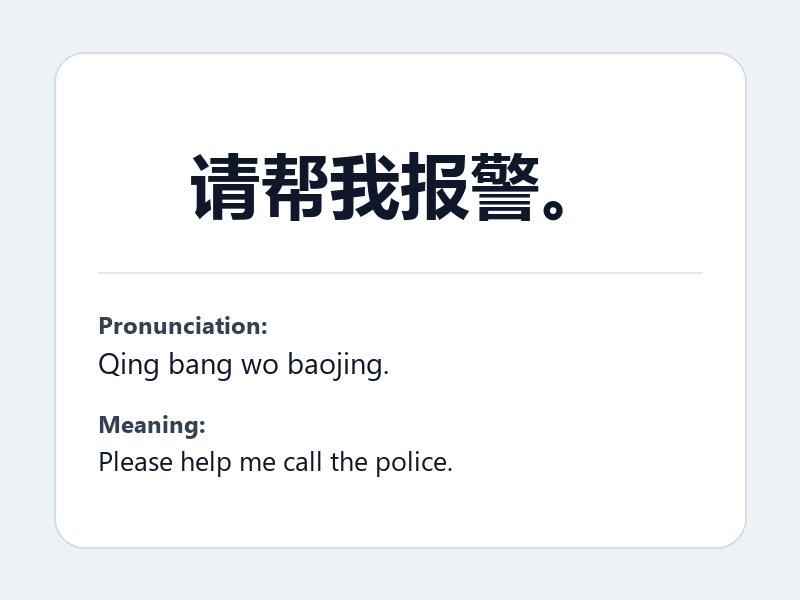
请帮我报警。
Pronunciation: Qing bang wo baojing.
Please help me call the police.
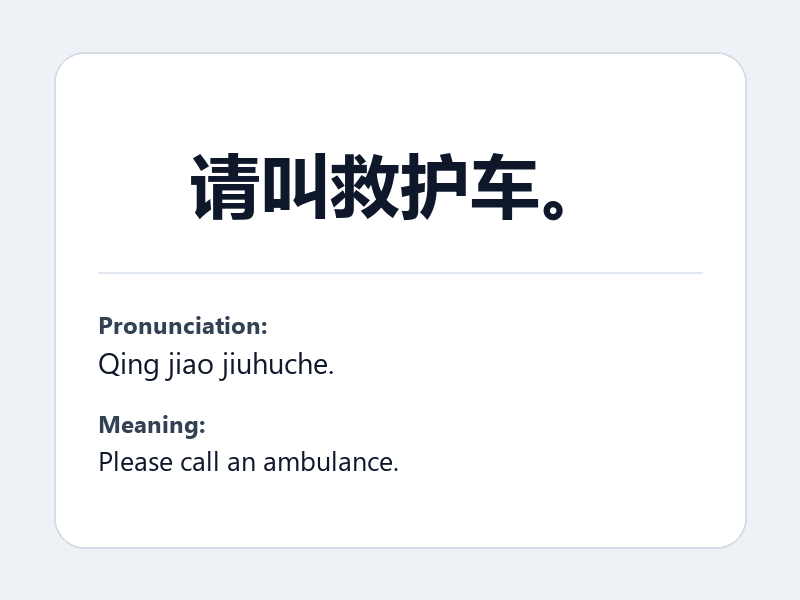
请叫救护车。
Pronunciation: Qing jiao jiuhuche.
Please call an ambulance.
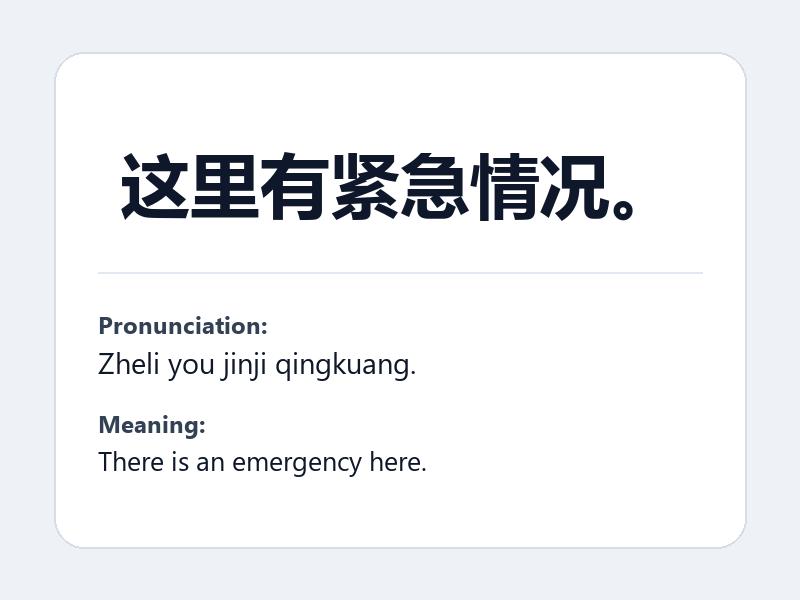
这里有紧急情况。
Pronunciation: Zheli you jinji qingkuang.
There is an emergency here.
FAQ
Should I save these numbers in English or Chinese?
Both are fine. The number is what matters, but saving a note like Police 110 / Ambulance 120 / Fire 119 helps when you are stressed.
Should I ask a random stranger to call?
If you must, yes. But a staffed public place is usually better: hotel desk, restaurant cashier, mall service desk, station counter, airport counter, or police station.
Important: This page is a practical travel guide, not legal, police, or medical advice. In a real emergency, use local emergency services and ask hotel staff, station staff, airport staff, police, hospital staff, or your embassy/consulate for help.
Before you leave the hotel: save 110, 120, 119, your hotel phone number, and your hotel address in Chinese. Those five things solve more than people expect.
Next: Go back to Emergency Help, or review what to do if you lose your passport or phone.