Tip: Save the phrase cards you may need before you go out. If a translation app fails, you can show the image directly to a hotel clerk, driver, cashier, restaurant staff member, or police officer.
Save this before you leave the terminal or station. At an airport or station, show the Chinese line first. Use pinyin only if staff ask you to say it.
Airport and station problems are stressful because you are often tired, carrying luggage, and watching the clock. This card keeps the phrases short enough to use quickly.
Open this when asking about gates, exits, platforms, ticket checks, luggage, or transfers.
Open this card at the airport, high-speed rail station, metro station, ticket counter, taxi area, baggage claim, or when you are trying to reach the city center.
How to use these in stations and airports
- Show the Chinese sentence beside your ticket, map, or booking screen. Transport staff can scan characters quickly even when the area is noisy.
- Use pinyin slowly only if the staff member wants you to speak. You do not need a full conversation. Ask for the next step.
- Keep the travel question direct. Stations are noisy and rushed, so long explanations are easy to miss.
- Screenshot the cards before leaving Wi-Fi. This helps with exits, platforms, ticket checks, luggage, metro transfers, and missed trains.
Station phrases worth saving
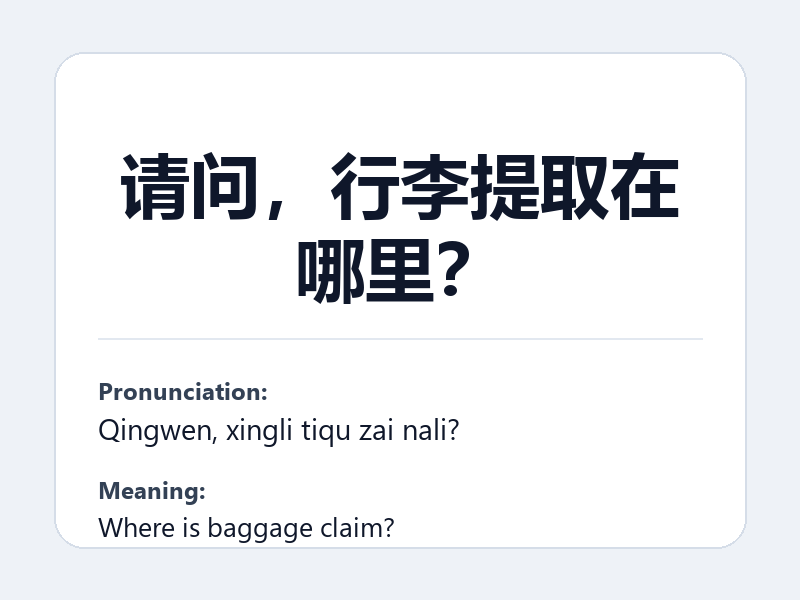
Use it when: You need baggage claim.
请问,行李提取在哪里?
Pinyin: Qingwen, xingli tiqu zai nali?
Where is baggage claim?
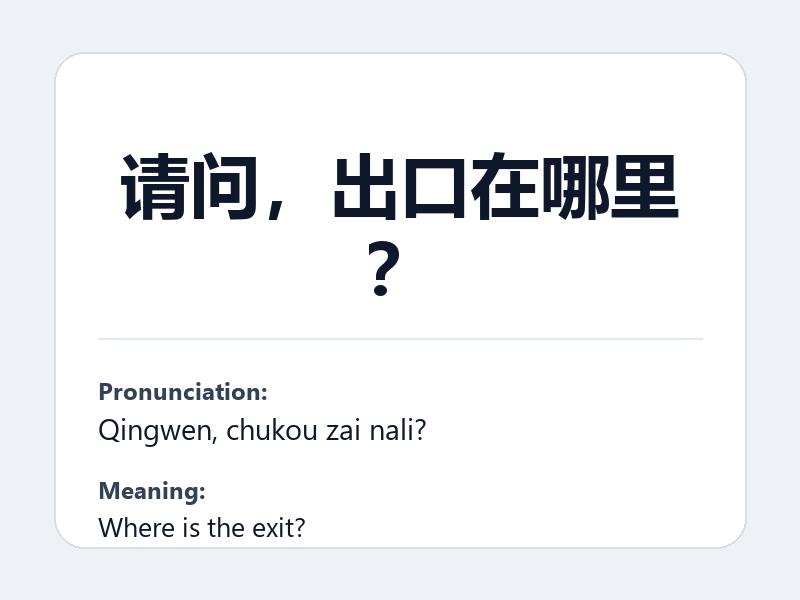
Use it when: You need the exit.
请问,出口在哪里?
Pinyin: Qingwen, chukou zai nali?
Where is the exit?
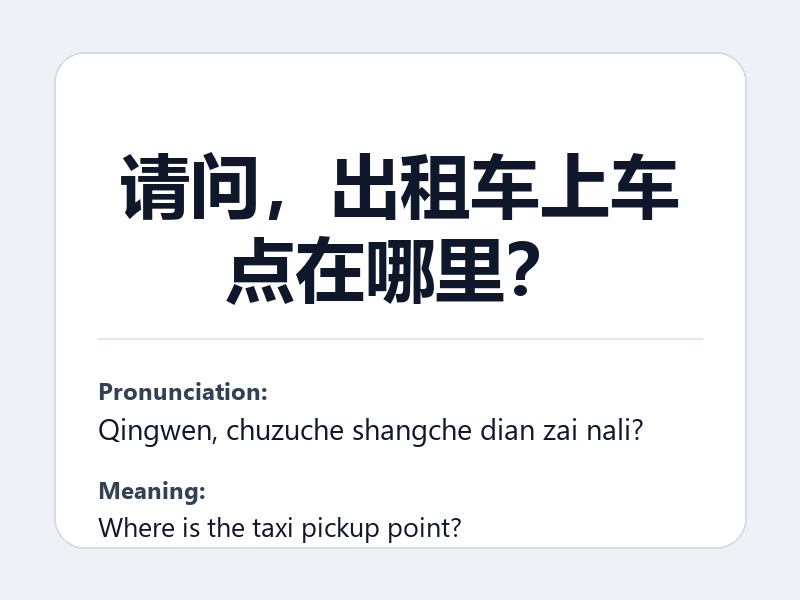
Use it when: You need the taxi pickup area.
请问,出租车上车点在哪里?
Pinyin: Qingwen, chuzuche shangche dian zai nali?
Where is the taxi pickup point?
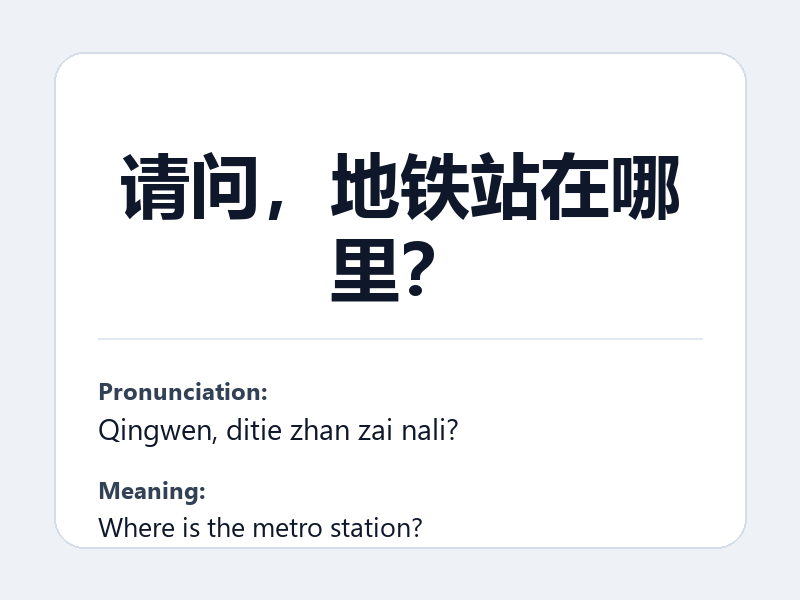
Use it when: You need the metro.
请问,地铁站在哪里?
Pinyin: Qingwen, ditie zhan zai nali?
Where is the metro station?
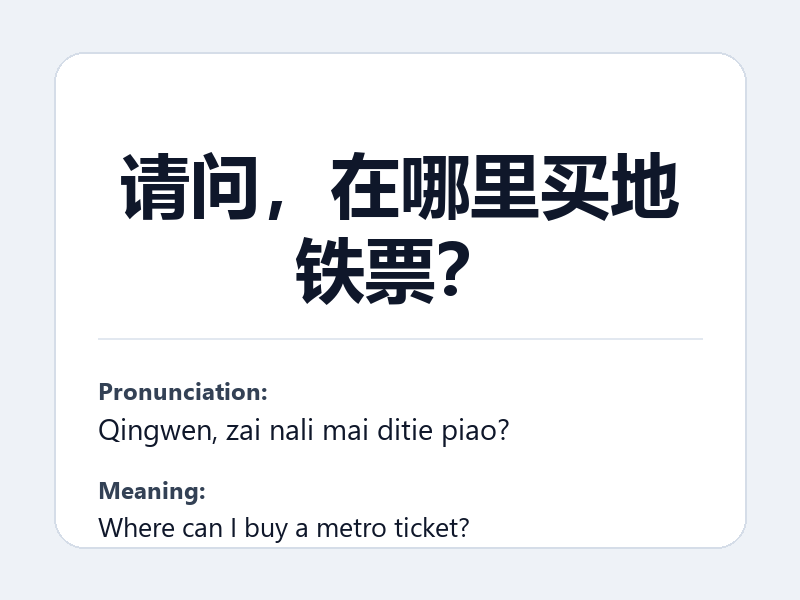
Use it when: You need a metro ticket.
请问,在哪里买地铁票?
Pinyin: Qingwen, zai nali mai ditie piao?
Where can I buy a metro ticket?
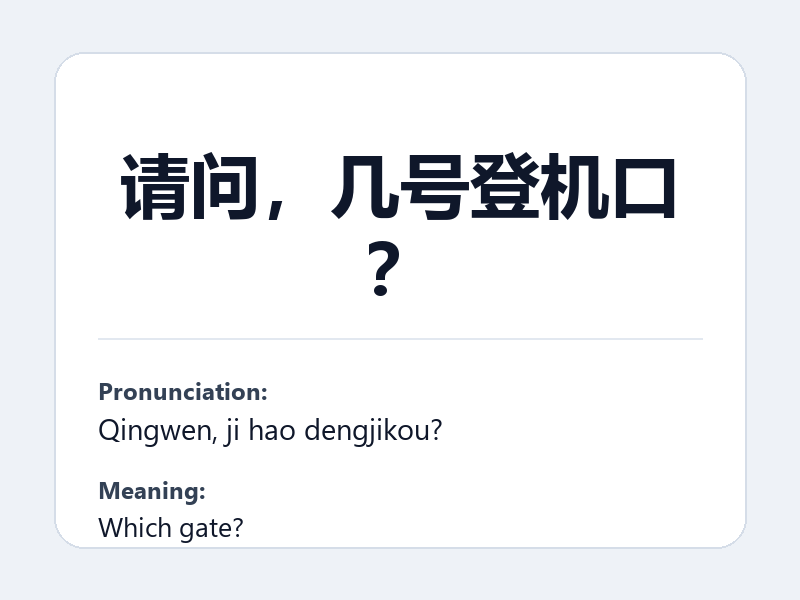
Use it when: You need the boarding gate.
请问,几号登机口?
Pinyin: Qingwen, ji hao dengjikou?
Which gate?
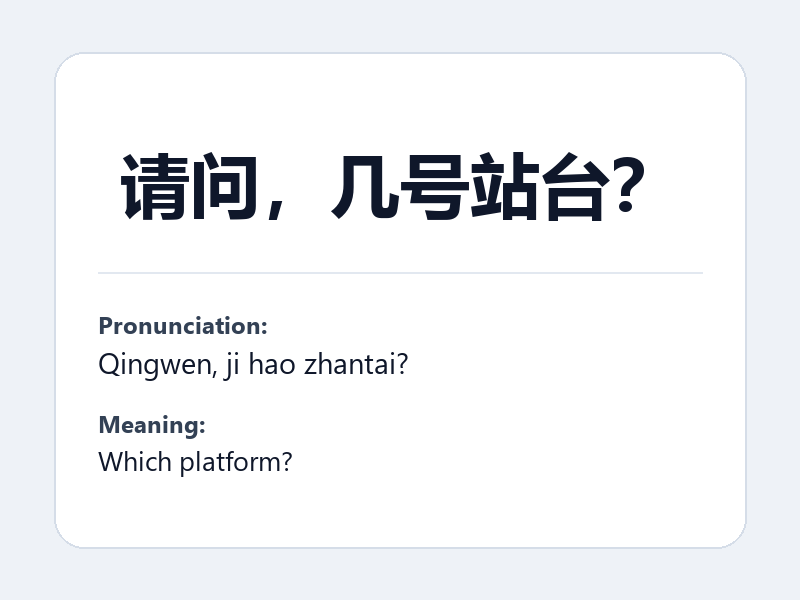
Use it when: You need the train platform.
请问,几号站台?
Pinyin: Qingwen, ji hao zhantai?
Which platform?
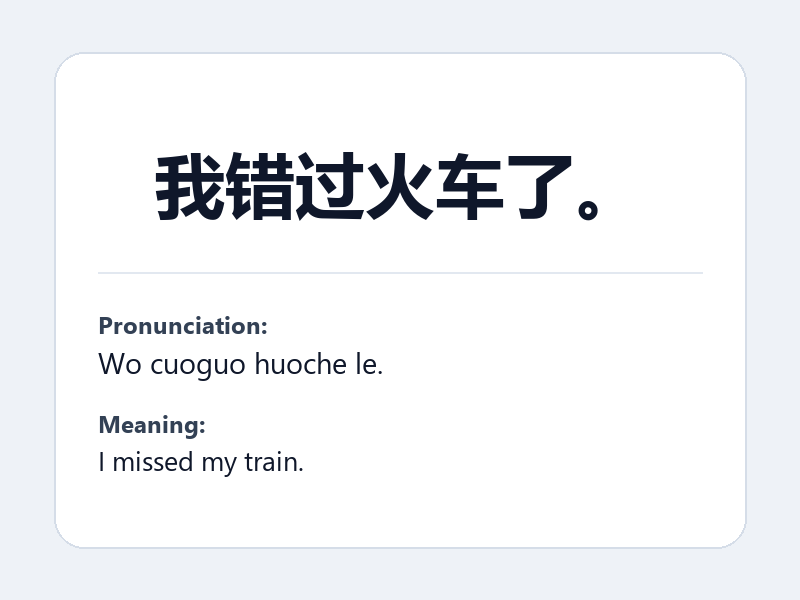
Use it when: You missed a train.
我错过火车了。
Pinyin: Wo cuoguo huoche le.
I missed my train.
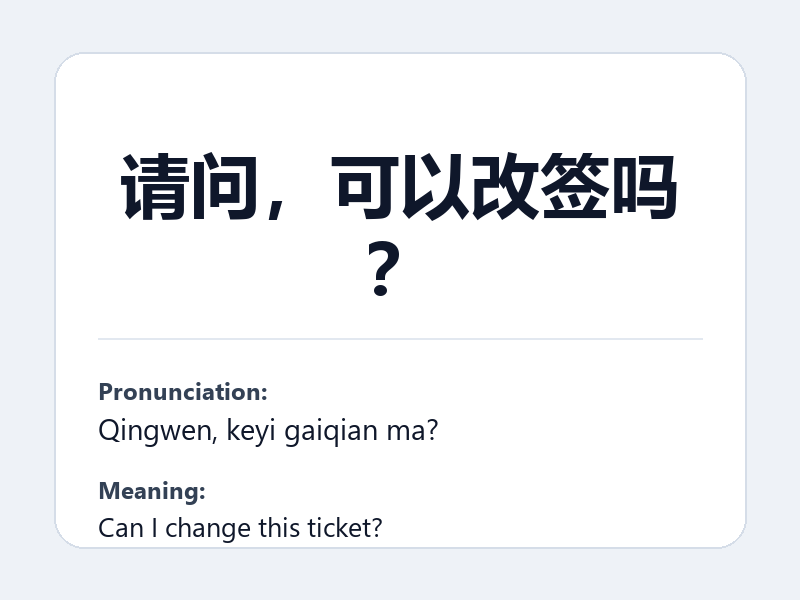
Use it when: You need to change a train ticket.
请问,可以改签吗?
Pinyin: Qingwen, keyi gaiqian ma?
Can I change this ticket?
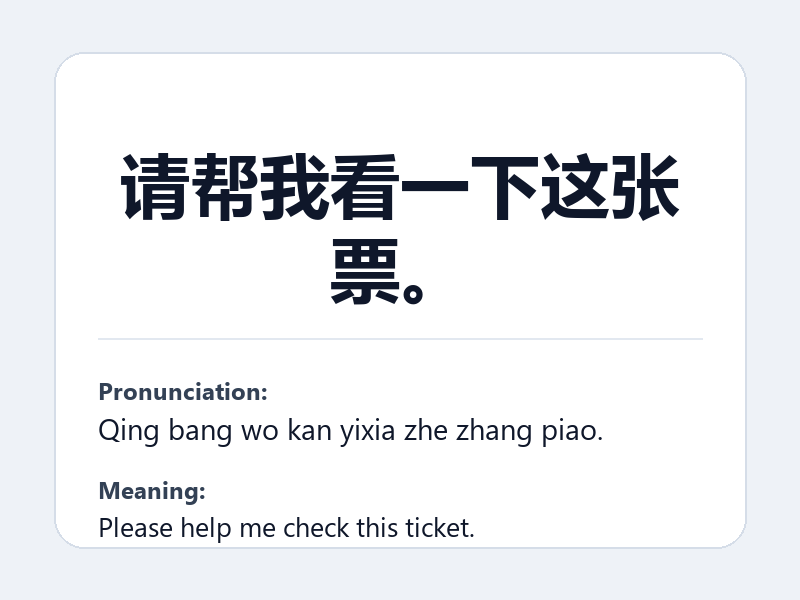
Use it when: You need staff to inspect your ticket.
请帮我看一下这张票。
Pinyin: Qing bang wo kan yixia zhe zhang piao.
Please help me check this ticket.
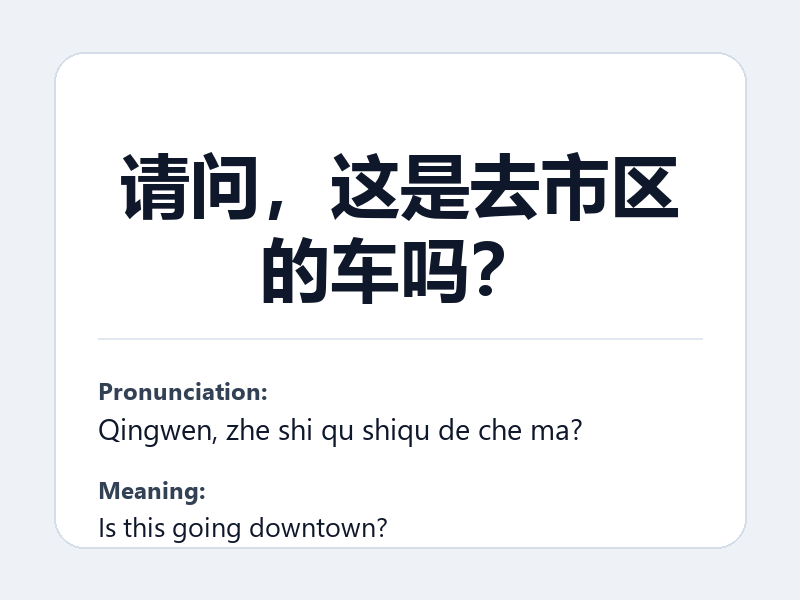
Use it when: You are looking for transport into the city.
请问,这是去市区的车吗?
Pinyin: Qingwen, zhe shi qu shiqu de che ma?
Is this going downtown?
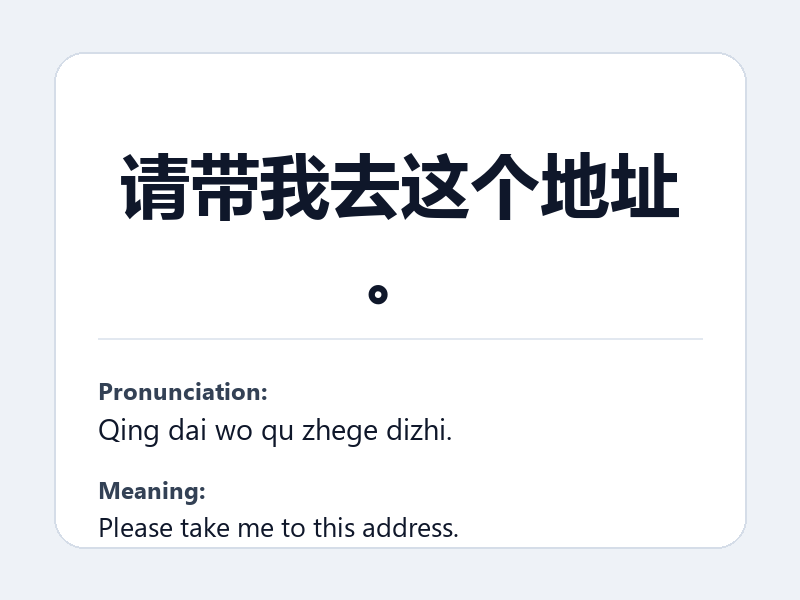
Use it when: You need to show an address.
请带我去这个地址。
Pinyin: Qing dai wo qu zhege dizhi.
Please take me to this address.
Where station wording gets confusing
- Large stations may have several exits. The nearest exit can matter more than the station name.
- High-speed rail tickets, metro tickets, and airport transfers can have different rules. Ask staff early rather than at the gate.
- If you are confused, show your ticket and destination together. Do not rely only on pronunciation.
FAQ
What should I screenshot before arriving?
Screenshot your flight or train number, hotel address in Chinese, map destination, and this phrase card.
What if I miss my train?
Go to the station service desk or ticket counter quickly and show `我错过火车了` plus your ticket.
Before leaving the station area: save the exit, platform, ticket, luggage, and hotel-address cards. Stations are noisy, so written phrases help.
Next: If you will take rail, open the high-speed train guide.