Quick answer: take high-speed rail when it works. Use long-distance buses for smaller towns, scenic areas, county-level destinations, or routes where the train station is too far away. Buy through a reliable platform, the official coach station channel, or the station ticket window. Avoid random vans outside stations.
Long-distance buses can be useful in China, but they are less predictable than trains. There is no single foreigner-friendly national bus system like Railway 12306. Routes, ticketing, ID rules, and station names can be local. A bus can still be the right answer; it just needs a more careful plan.
When does a long-distance bus make sense?
- The destination has no convenient train station. Many scenic towns, counties, and mountain areas are easier by coach.
- The train station is far from the place you actually need. A coach may arrive closer to the town center or scenic area.
- You are traveling regionally. Short intercity trips within a province can be easier by bus than by train.
- You can confirm the station and destination in Chinese. If you cannot, ask your hotel to help before leaving.
Which tools should you try?
- Trip.com / Ctrip (携程, Xiecheng): useful for some coach routes and easier for English-speaking travelers when available.
- Alipay (支付宝, Zhifubao) or WeChat (微信, Weixin) mini programs: search terms such as 汽车票 (qichepiao, bus ticket), 客运站 (keyunzhan, coach station), or the city name plus 汽车票.
- Local coach station official account or mini program: many cities and stations have their own ticketing channel. It may be Chinese-only.
- AMap / Gaode Maps (高德地图, Gaode Ditu) or Baidu Maps (百度地图, Baidu Ditu): use these to confirm the exact coach station location. Search 客运站 or 长途汽车站.
- Hotel front desk: for a foreign visitor, this can be the most reliable backup. Ask them to write the station and destination in Chinese.
What Chinese words should you recognize?
- 汽车票 (qichepiao): bus ticket.
- 客运站 (keyunzhan): coach/passenger transport station.
- 长途汽车站 (changtu qichezhan): long-distance bus station.
- 售票窗口 (shoupiao chuangkou): ticket counter.
- 检票口 (jianpiaokou): ticket gate / boarding gate.
- 发车时间 (fache shijian): departure time.
How should you buy the ticket?
- Confirm the Chinese destination name. Save it as Chinese characters, not only English.
- Check whether the route appears on Trip.com / Ctrip or a local ticketing mini program. If it does, compare station names carefully.
- If online booking does not accept your passport, buy at the station window. Bring your passport and show the Chinese destination.
- Arrive earlier than you think. For your first coach station, 45-60 minutes is safer than rushing.
- Keep your ticket and passport accessible. Some stations may check ID before boarding.
What should you avoid?
- Do not take random vans outside railway stations, airports, or scenic spots. They may be overpriced, unclear, or unsafe.
- Do not follow someone just because they say your destination. Go to the official station, ticket window, or clearly marked boarding area.
- Do not rely on English station names. A city can have several bus stations, and English translations may be inconsistent.
- Do not plan a tight same-day flight or train connection after a coach ride. Buses are more exposed to traffic and weather delays.
What should you do at the coach station?
- Find the ticket hall or boarding hall. Look for 售票, 候车, or 检票口.
- Show your destination in Chinese. If buying at the window, also show the travel date and approximate time.
- Confirm the departure time and gate. Take a photo of the ticket if allowed, but keep the physical ticket if issued.
- Before boarding, confirm the bus destination. Show the driver or staff your destination card if you are unsure.
- Keep luggage claim tags if given. Some buses store larger bags underneath.
What should you say?
Save the cards you may need before leaving your hotel. For buses, the most important thing is showing the destination in Chinese.
- 请问,客运站售票窗口在哪里? (Qingwen, keyunzhan shoupiao chuangkou zai nali?)
Where is the ticket counter at the coach station?
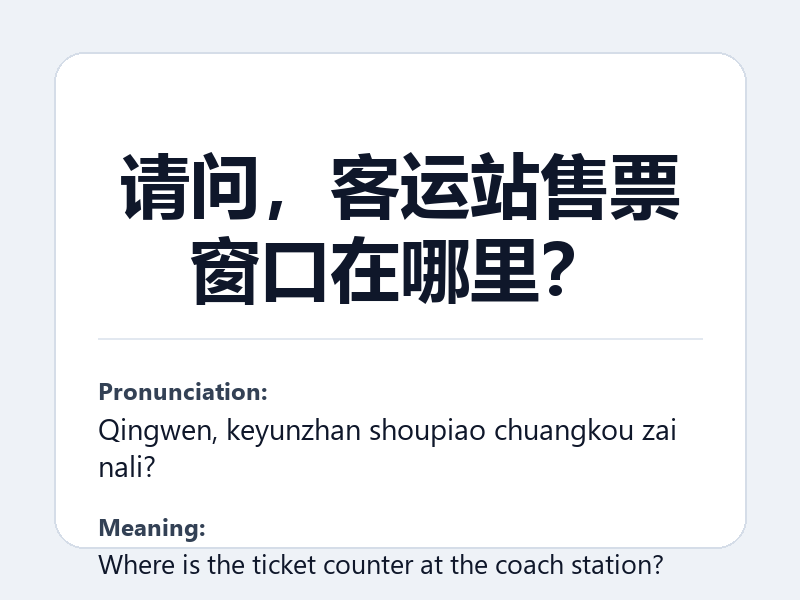
Save this phrase card before you go out. - 请问,这辆车到这里吗? (Qingwen, zhe liang che dao zheli ma?)
Does this bus go to this place?
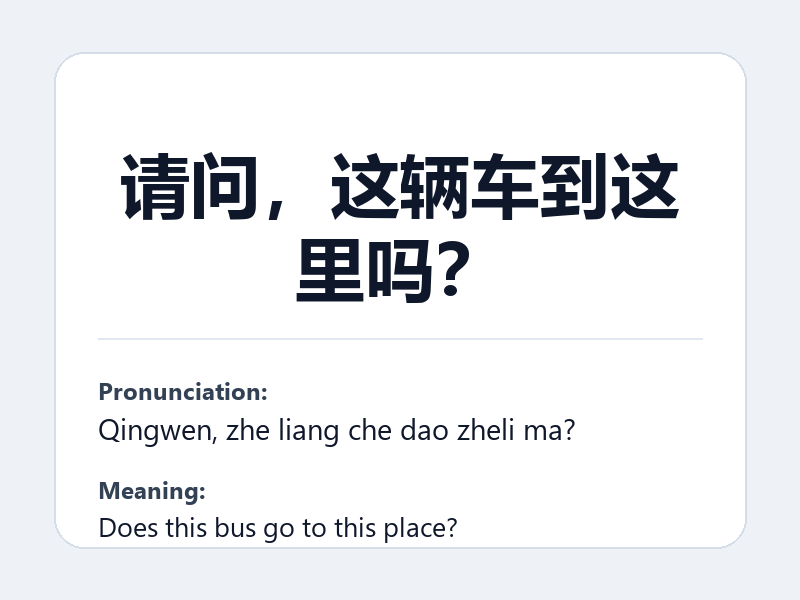
Save this phrase card before you go out. - 请问,在哪个检票口上车? (Qingwen, zai nage jianpiaokou shangche?)
Which gate do I board from?
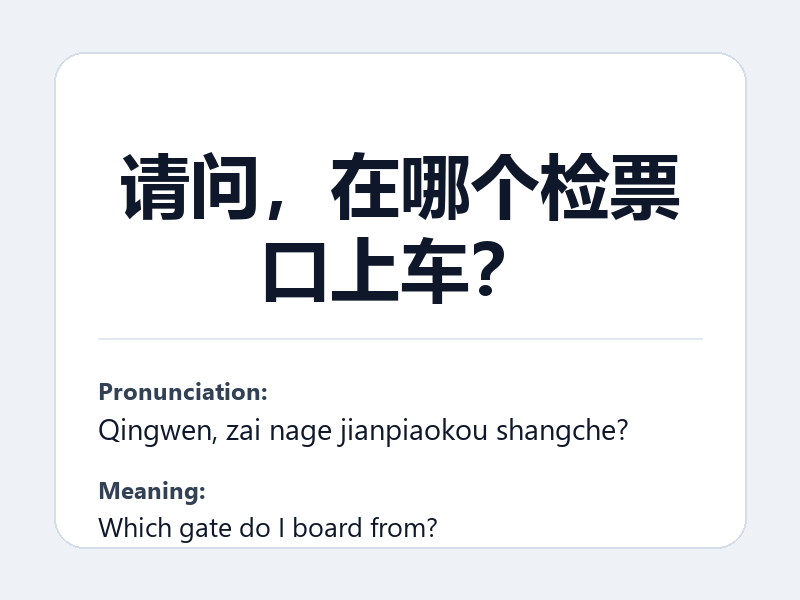
Save this phrase card before you go out.
FAQ
Is a long-distance bus worse than a train?
Not always. For major city-to-city routes, trains are usually easier and more predictable. For smaller towns and scenic areas, a bus may be the practical choice.
Can foreigners buy coach tickets with a passport?
Often yes at station windows, but online channels vary. If an app does not accept your passport, use the station window or ask your hotel to help identify the right ticketing channel.
Should I buy at the station or online?
Online is convenient if the platform accepts your document and you understand the station names. The station window is safer if the route is local, confusing, or Chinese-only.
What is the biggest mistake?
Going to the wrong station or taking an unofficial vehicle. Always confirm the Chinese station name and use an official ticketing/boarding area.
What should I ask my hotel to write down?
Ask for: your destination in Chinese, the correct coach station name, the phrase “I want to buy a bus ticket to this place today,” and your hotel address for the return trip.