Tip: Save the phrase cards you may need before you go out. If a translation app fails, you can show the image directly to a hotel clerk, driver, cashier, restaurant staff member, or police officer.
Start here: Avoid very cheap tours, unclear itineraries, and any tour that does not clearly say whether shopping stops are included.
A high-pressure tour does not always look wrong at the beginning. It may look convenient: a low price, friendly guide, hotel pickup, and a promise to see many places in one day. The problem starts when the itinerary changes, the guide spends too much time at shops, or you feel pressured to buy jade, tea, silk, medicine, jewelry, or souvenirs.
What it looks like
- The tour price is much lower than similar options.
- The itinerary says little about how long you will stay at each attraction.
- The listing avoids saying whether shopping stops are included.
- A stranger near a scenic area offers a private guide, special ticket, or shortcut.
- The guide says a shop visit is required or everyone must go inside.
What to do before you join or pay
- Book through traceable channels. Use reputable platforms, hotel recommendations, or official tourism services rather than a stranger at the gate.
- Ask one direct question before booking: Are there any shopping stops? If yes, how many and how long?
- Check whether tickets, meals, transport, and guide service are included. Low base prices can hide add-ons.
- Keep screenshots of the listing and itinerary. If the tour changes later, screenshots give you something concrete to show the platform, hotel, or staff.
- Leave if you feel trapped. If you are in a public area, you do not need to keep following a guide who is pressuring you.
Warning signs
- The guide says the attraction is closed but offers a different route to a shop.
- You are taken to a private room, upstairs shop, tea room, or showroom you did not request.
- The guide becomes less friendly when you do not buy.
- The group spends more time shopping than sightseeing.
- You are told not buying will embarrass the guide or driver.
Show this sentence
- 我不想购物,谢谢。 (Wo bu xiang gouwu, xiexie.)
I do not want to shop, thank you.
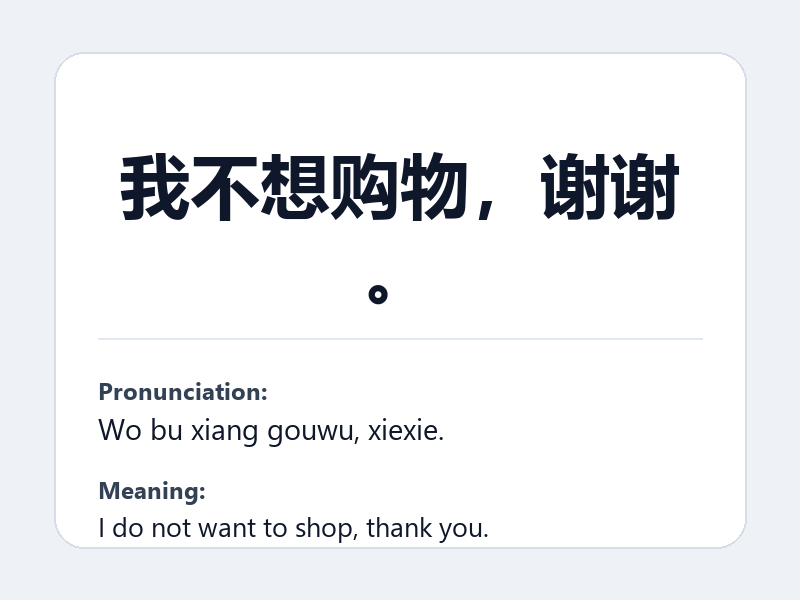
Save this phrase card before you go out. - 请带我去下一个景点。 (Qing dai wo qu xiayige jingdian.)
Please take me to the next attraction.
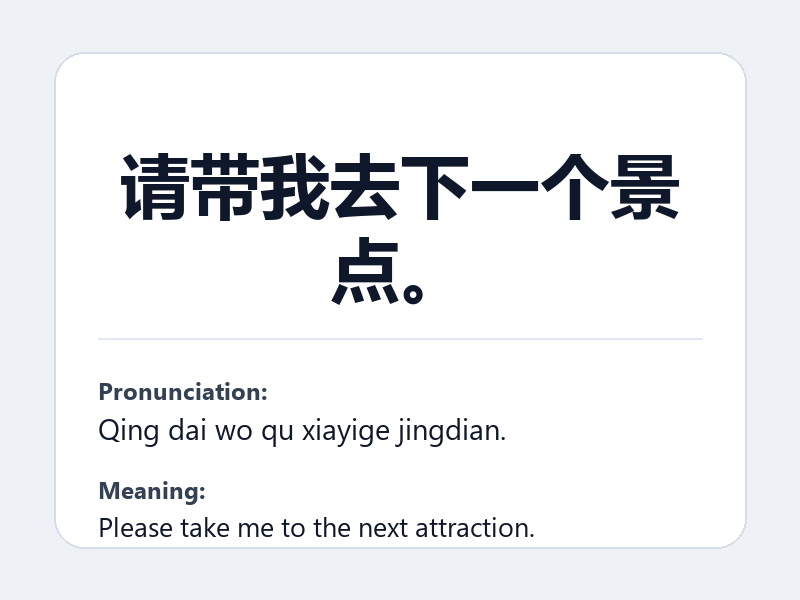
Save this phrase card before you go out. - 我不需要,谢谢。 (Wo bu xuyao, xiexie.)
I do not need it, thank you.
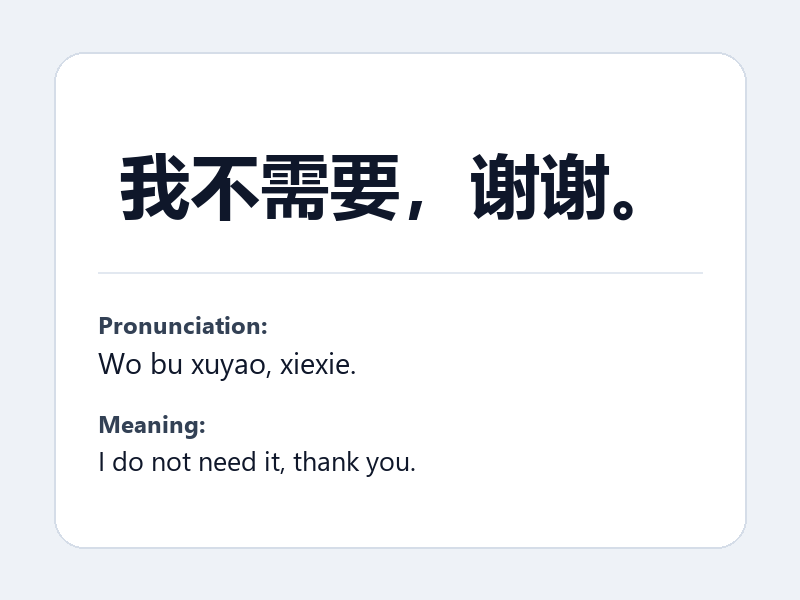
Save this phrase card before you go out. - 我要结束行程,请带我回去。 (Wo yao jieshu xingcheng, qing dai wo huiqu.)
I want to end the trip. Please take me back.
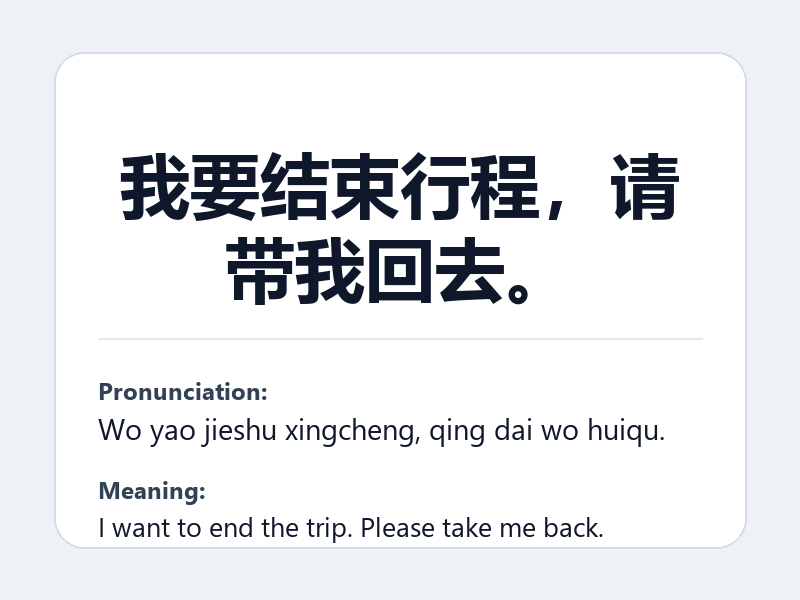
Save this phrase card before you go out.
If the tour already feels wrong
- Save the tour listing, chat history, payment record, and guide contact.
- Contact the booking platform first if you booked online.
- Ask your hotel front desk to help you call the platform or explain the issue in Chinese.
- If you feel unsafe, move to a public place and ask official staff for help.
FAQ
Are all shopping stops bad?
No. Some tours openly include shopping stops and some travelers enjoy them. The problem is hidden shopping, pressure, or losing most of your sightseeing time.
Is a private guide always safer?
Not automatically. A good private guide can be excellent, but you still need clear pricing, itinerary, cancellation terms, and no hidden shopping stops.
Before booking a tour: look for the shopping-stop warning signs and save a refusal phrase. A suspiciously cheap tour usually has a reason.
Next: Go back to Avoid Overcharging & Pressure, or read what to do if someone pressures you to buy something.