The metro is usually the easiest part of a Chinese city once you are through the gate. The awkward part comes five minutes earlier: deciding which payment method works in that city, finding the correct entrance, and making sure you are heading toward the right terminal station.
Before your first ride
- Take a screenshot of the destination in Chinese.
- Note the line number, direction or terminal station, interchange station, and final exit.
- Keep one payment backup. A method that works in Beijing may not be offered at every gate in another city.
- Allow extra time for the security check and for finding the correct entrance.
- If you carry large luggage, look for the wide gate or ask staff rather than forcing it through a narrow gate.
How to pay
Chinese metro systems do not all use the same ticketing setup. Depending on the city and station, you may be able to use a single-journey ticket, a transport card, a metro QR code inside Alipay or another app, or a supported contactless bank card. Beijing and Shanghai have expanded direct bank-card access, but you should not assume the same arrangement exists nationwide.
For a first ride, I would choose the method with the fewest moving parts:
- Try a staffed ticket machine or counter for a single-journey ticket.
- If English is available, select the destination and check the fare before paying.
- Keep the ticket until you have exited. Some systems require it at the destination gate.
- If the machine rejects your card or wallet, move aside and ask staff. Do not keep tapping while a queue forms.
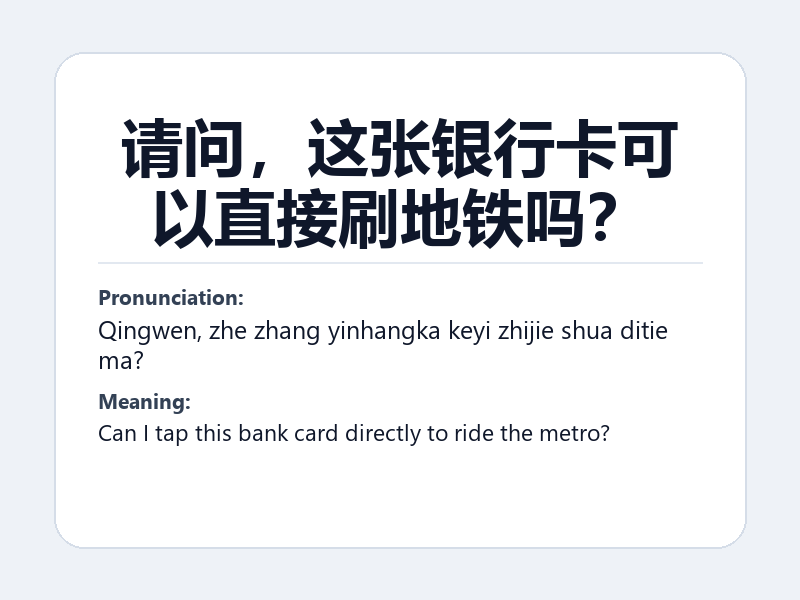
请问,这张银行卡可以直接刷地铁吗?
Pronunciation: Qingwen, zhe zhang yinhangka keyi zhijie shua ditie ma?
Can I tap this bank card directly to ride the metro?
Entering the station
Many stations have a security check near the entrance. Put bags on the scanner and keep your phone, wallet, passport, and small valuables with you. Drinks may be checked separately. Follow staff instructions; the process is normally quick.
At the gate, use the same medium for entry and exit. If you enter with a physical bank card, do not exit with the card stored in your phone. If you use a QR code, make sure the correct city’s transport code is open and the screen brightness is high enough.
Choose the direction before you reach the platform
The platform sign usually shows the next station and the terminal station for that direction. Compare both with your route. Line colors help, but line numbers and Chinese station names are safer when two colors look similar on a crowded map.
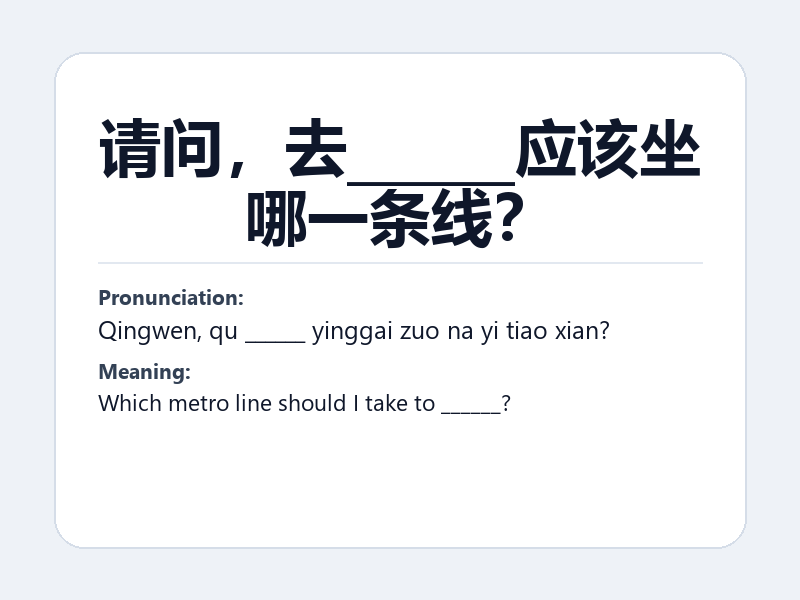
请问,去______应该坐哪一条线?
Pronunciation: Qingwen, qu ______ yinggai zuo na yi tiao xian?
Which metro line should I take to ______?
If you discover the mistake after one stop, get off calmly and follow signs to the opposite platform. Do not try to cross tracks or push through a gate marked staff-only.
Transfers can involve real walking
An interchange symbol does not always mean the next platform is beside you. Large hubs can involve long corridors, stairs, and another security or fare-area check. Follow the line number all the way; do not simply follow the largest crowd.
- Keep children and companions together before stepping onto an escalator.
- Let passengers leave the train before boarding.
- Move away from the doors once inside.
- On an escalator, follow local signs rather than assuming which side should remain clear.
Do not plan around the advertised closing time alone
The station may still be open after the last useful train for your direction has departed. Airport lines may finish earlier than the rest of the network. Check the last departure from the station you will actually use, including the transfer needed later in the journey.
For a late arrival, save a taxi or DiDi backup and your hotel address in Chinese. Read the late-night airport plan before landing.
If the gate will not open
- Red light at entry: the card, ticket, or QR code may not be valid for that city or gate.
- Red light at exit: the entry record may be missing, the ticket may cover a different destination, or the wrong payment medium was used.
- Phone has no signal: some transport codes need the app to load before the gate. Open it before going underground when possible.
- Phone battery is low: do not wait until the last one percent. Buy a ticket or speak to staff while the screen still works.
Go to the staffed gate and show the ticket, payment screen, or card used to enter. A gate error is routine; climbing over it turns a small problem into the wrong kind of attention.
FAQ
Do I need my passport to ride the metro?
Ordinary urban metro rides usually do not require a passport, but carry it when the rest of your day involves real-name attractions or intercity travel.
Can I bring a suitcase?
Usually yes, within local size and safety rules. Use elevators or wide gates where available, and avoid placing luggage where it blocks doors.
Can I eat or drink on the train?
Rules vary by city. The practical answer is to wait until you leave the train unless local signs clearly permit it.
What if I leave through the wrong exit?
Check the map before walking far. Crossing a major road above ground can take longer than returning through an underpass. Staff can point you toward the correct exit, but you may need to walk around the station if you have already left the paid area.
City rules used for this guide
- Beijing: direct foreign bank-card access on public transport
- Shanghai: official guide to metro payment and ticket options
Also useful: maps that work better in China and the transport guidebook.