Tip: Save the phrase cards you may need before you go out. If a translation app fails, you can show the image directly to a hotel clerk, driver, cashier, restaurant staff member, or police officer.
Save this before your first ride. With a driver, show the Chinese line first. Use the pinyin only if the driver asks you to speak.
Transport problems are common in the first 72 hours: your driver may call you, the pickup point may be confusing, or the English name of your hotel may not match the Chinese address. This card helps with taxis, DiDi (滴滴, Didi), and street directions.
Open this when the driver cannot find you, the pickup point is unclear, or the route needs a simple correction.
Open this card when you are trying to meet a driver, confirm an address, ask someone where the metro is, or explain where you need to go.
How to use these with a driver
- Show the Chinese sentence on your phone before calling or gesturing. The driver will understand characters more reliably than foreign pronunciation.
- Read the pinyin slowly only if the driver is listening and waiting. Do not over-explain. Drivers need a short instruction, not a story.
- Keep the ride instruction short. Pickup areas, gates, and road names can already be confusing; extra words usually make it worse.
- Screenshot the pickup and address cards before leaving the airport, station, or hotel. This helps with DiDi pickup, taxi queues, hotel addresses, route problems, and phone-tail checks.
Ride phrases worth saving
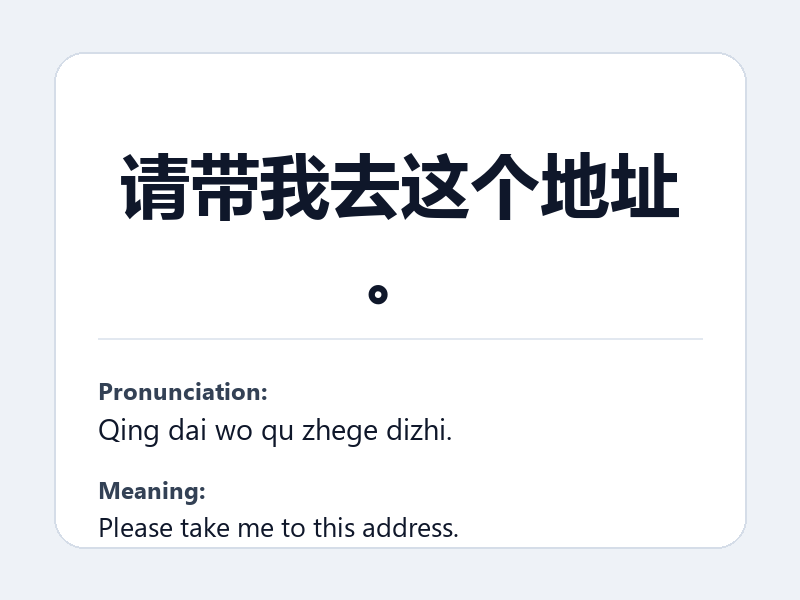
Use it when: You need to show your destination.
请带我去这个地址。
Pinyin: Qing dai wo qu zhege dizhi.
Please take me to this address.
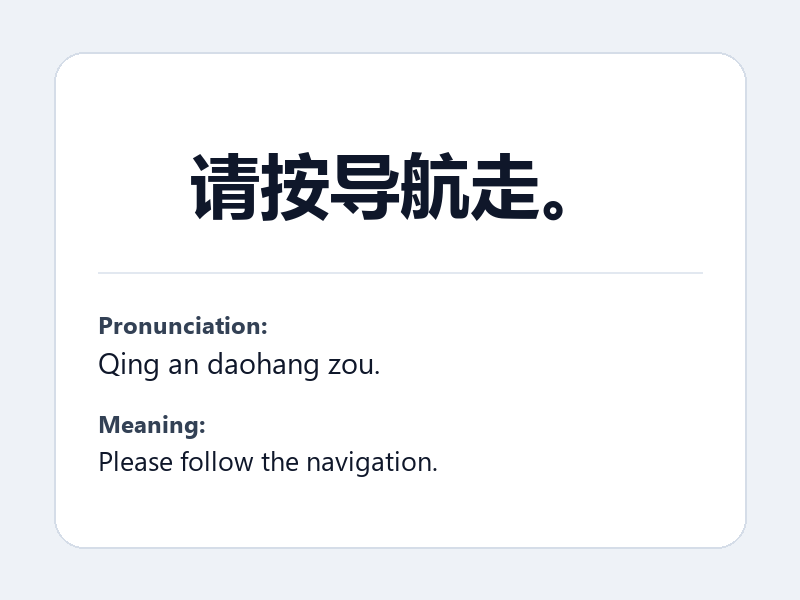
Use it when: You want the driver to follow the app route.
请按导航走。
Pinyin: Qing an daohang zou.
Please follow the navigation.
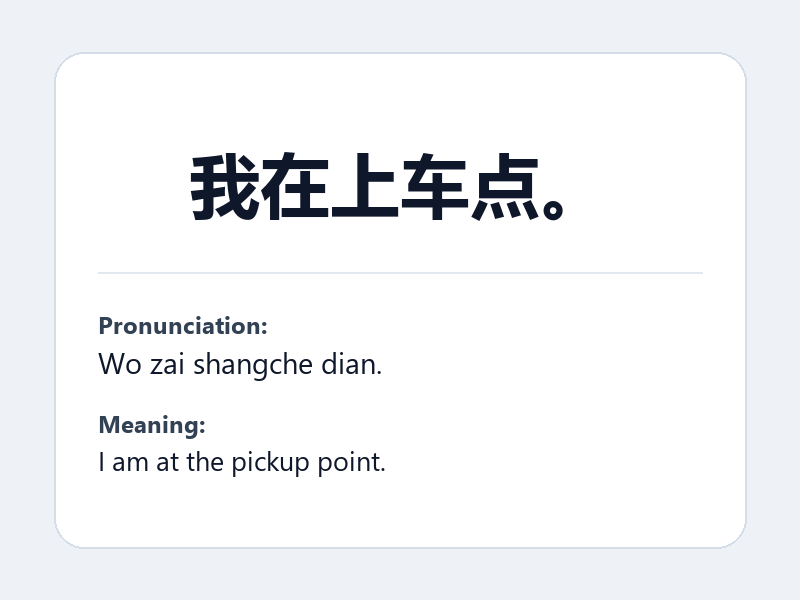
Use it when: You are waiting at the pickup point.
我在上车点。
Pinyin: Wo zai shangche dian.
I am at the pickup point.
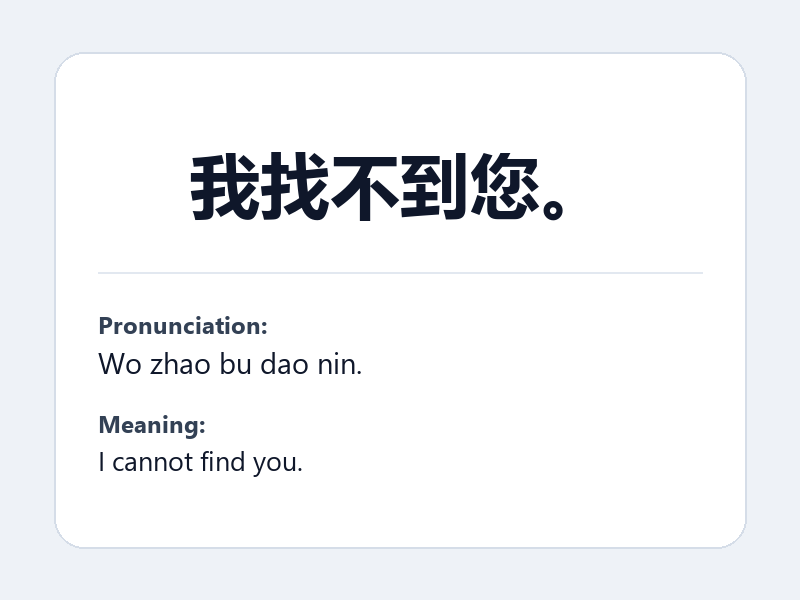
Use it when: You cannot find the driver.
我找不到您。
Pinyin: Wo zhao bu dao nin.
I cannot find you.
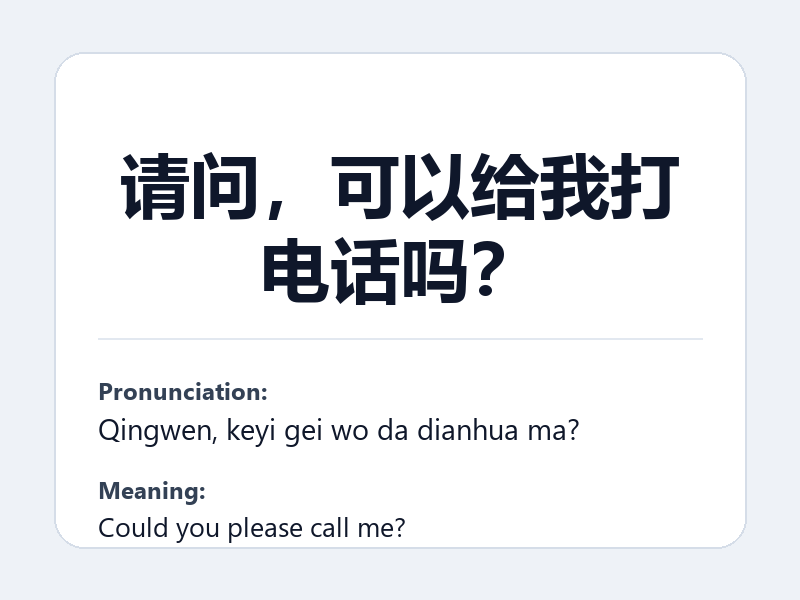
Use it when: You need the driver to call.
请问,可以给我打电话吗?
Pinyin: Qingwen, keyi gei wo da dianhua ma?
Could you please call me?
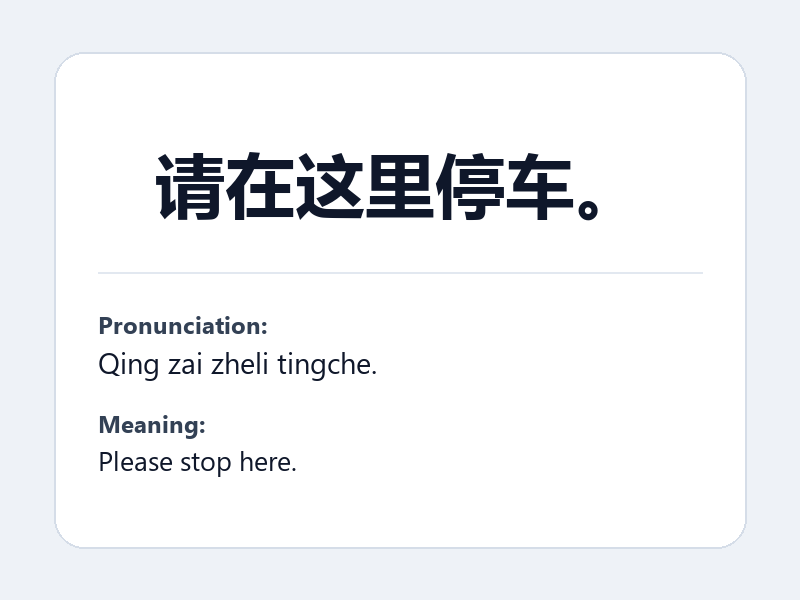
Use it when: You want to get out here.
请在这里停车。
Pinyin: Qing zai zheli tingche.
Please stop here.
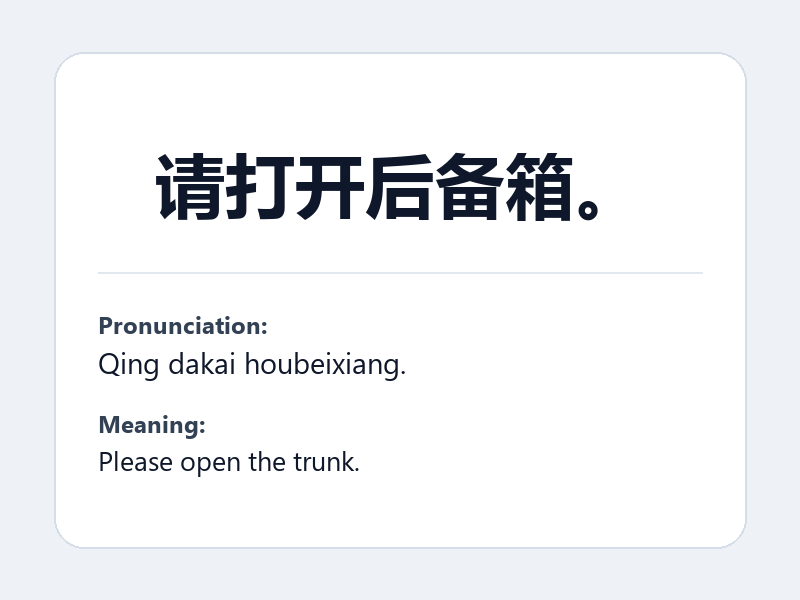
Use it when: You have luggage.
请打开后备箱。
Pinyin: Qing dakai houbeixiang.
Please open the trunk.
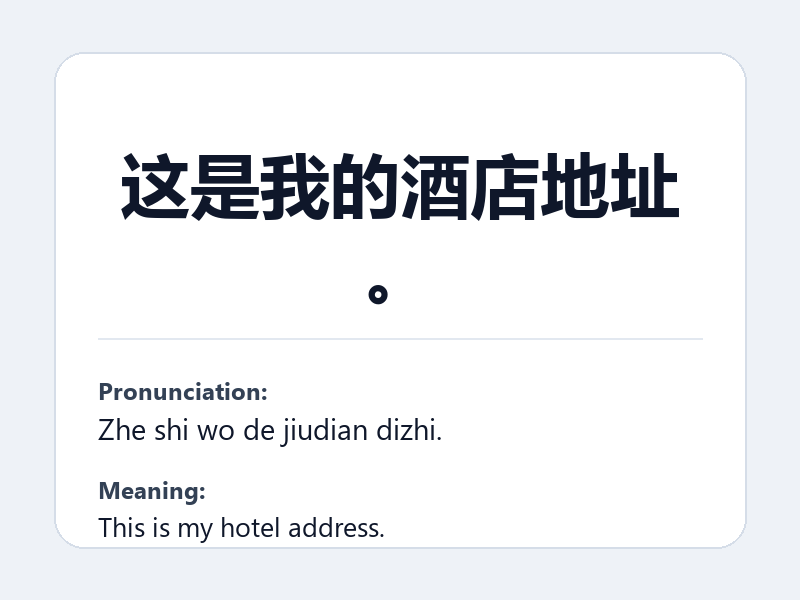
Use it when: You need to show your hotel.
这是我的酒店地址。
Pinyin: Zhe shi wo de jiudian dizhi.
This is my hotel address.
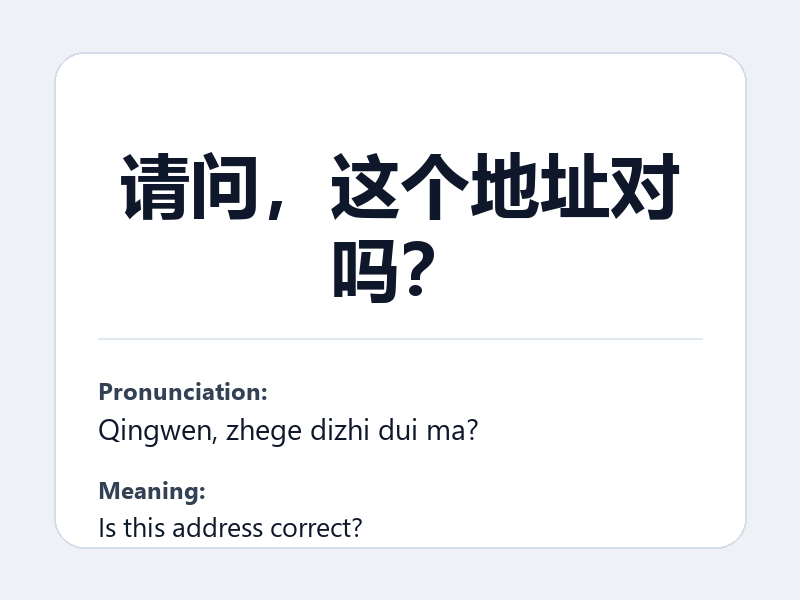
Use it when: You need confirmation.
请问,这个地址对吗?
Pinyin: Qingwen, zhege dizhi dui ma?
Is this address correct?
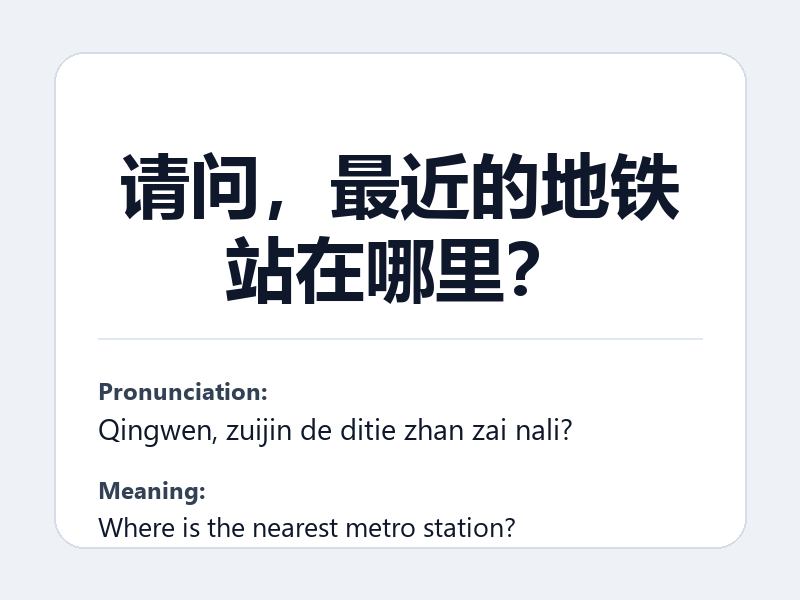
Use it when: You need the nearest subway.
请问,最近的地铁站在哪里?
Pinyin: Qingwen, zuijin de ditie zhan zai nali?
Where is the nearest metro station?
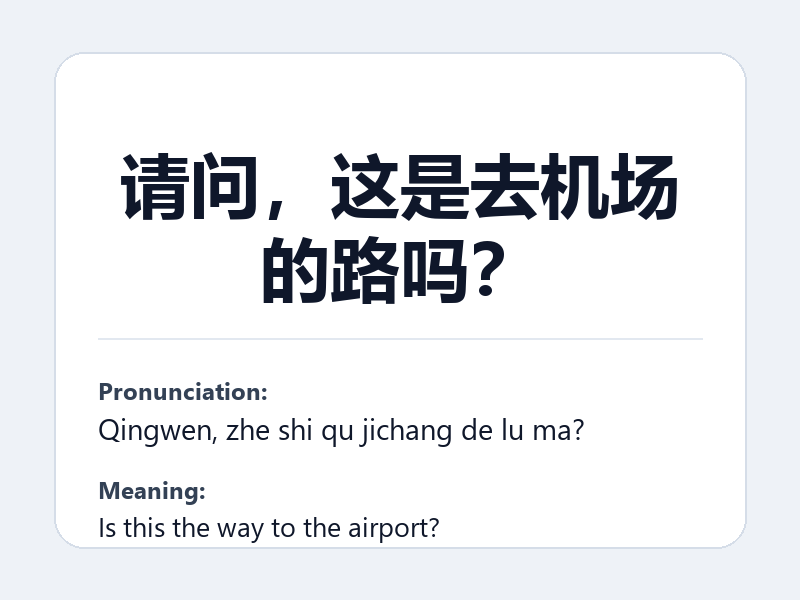
Use it when: You are heading to the airport.
请问,这是去机场的路吗?
Pinyin: Qingwen, zhe shi qu jichang de lu ma?
Is this the way to the airport?
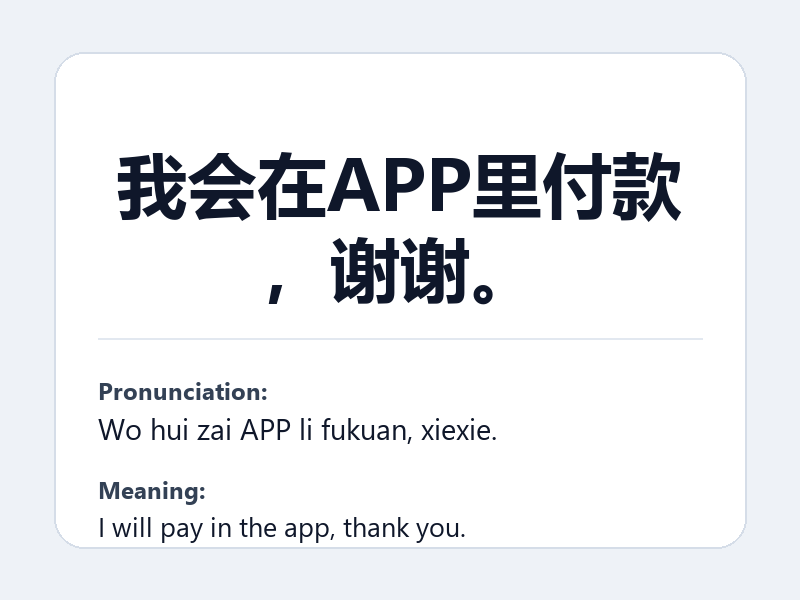
Use it when: You will pay through the ride-hailing app.
我会在APP里付款,谢谢。
Pinyin: Wo hui zai APP li fukuan, xiexie.
I will pay in the app, thank you.
Where ride communication breaks down
- Many hotels and malls have multiple entrances. The map pin may not match the real pickup point.
- The driver may call in Chinese. If you cannot speak, send or show the short phrase instead of trying to explain everything.
- Always save your hotel address in Chinese, not only the English hotel name.
FAQ
What if the driver keeps calling me?
Send the phrase `I cannot speak Chinese. Please use the app message.` through the app if possible, or show a nearby staff member the pickup problem.
Should I use the English hotel name?
Use the Chinese address. English hotel names often sound different from the way local drivers know the place.
Before you request a ride: save your hotel address, pickup instructions, and phone-tail card. It is much easier to show a driver than to explain from scratch.
Next: If you are arriving late, read the late-night airport arrival guide.