Tip: Save the phrase cards you may need before you go out. If a translation app fails, you can show the image directly to a hotel clerk, driver, cashier, restaurant staff member, or police officer.
Save this before you need medicine. In a clinic or pharmacy, show the Chinese line first. Use pinyin only if the person asks you to say it.
This is a practical language card, not medical advice. Use it to communicate basic symptoms, allergies, and urgent needs at a hospital, clinic, pharmacy, hotel front desk, or with a local helper.
Open this when describing symptoms, allergies, medicine needs, or asking where to go.
Open this card when you feel sick, need medicine, need a hospital, cannot explain symptoms, or need someone to call emergency help.
How to use these for health problems
- Show the Chinese sentence and then point to the symptom or medicine photo if you have one. For health problems, written Chinese is safer than improvised pronunciation.
- Use pinyin slowly only after the person has read the card. Do not try to diagnose yourself in Chinese. State the simple symptom and ask for help.
- Keep the medical request plain. Health words can be serious, so short and specific is safer than detailed but unclear.
- Screenshot the cards before going to a pharmacy or hospital. This helps with symptoms, allergies, basic medicine, payment, and asking staff where to register.
Health phrases worth saving
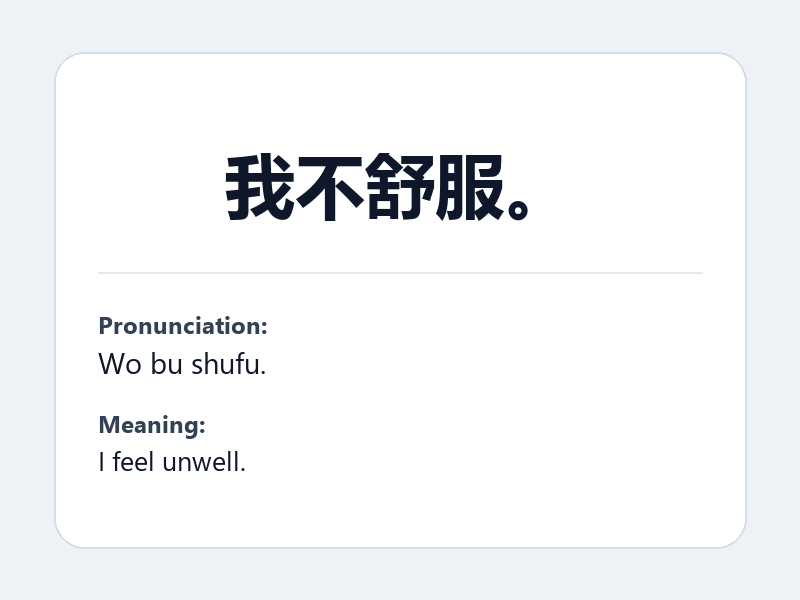
Use it when: You need help but cannot explain yet.
我不舒服。
Pinyin: Wo bu shufu.
I feel unwell.
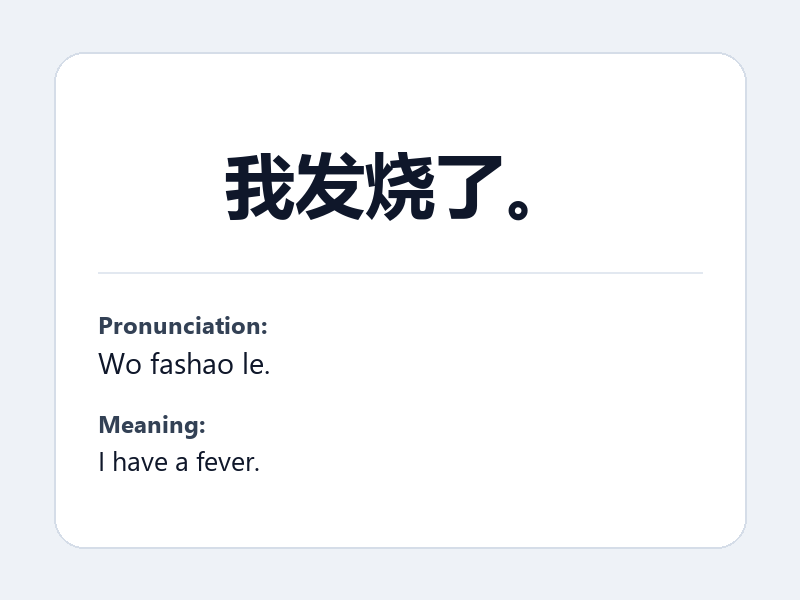
Use it when: You have a fever.
我发烧了。
Pinyin: Wo fashao le.
I have a fever.
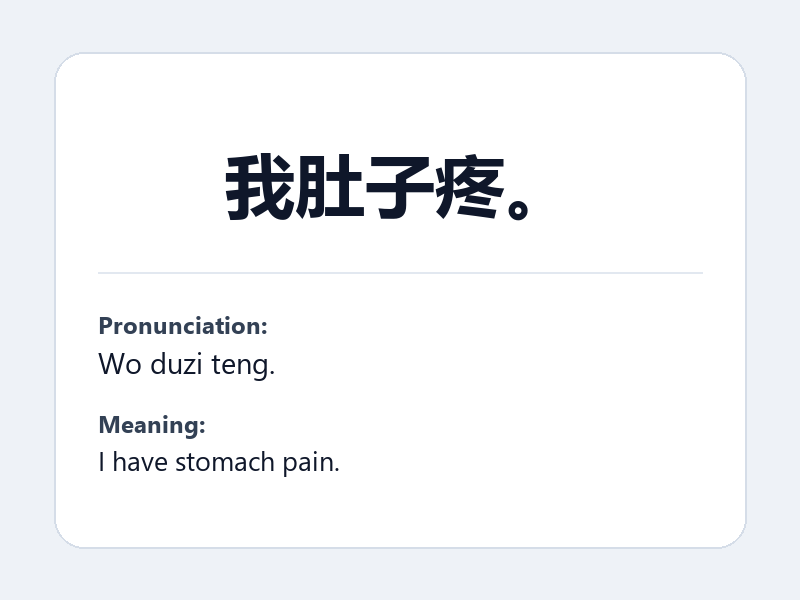
Use it when: Your stomach hurts.
我肚子疼。
Pinyin: Wo duzi teng.
I have stomach pain.
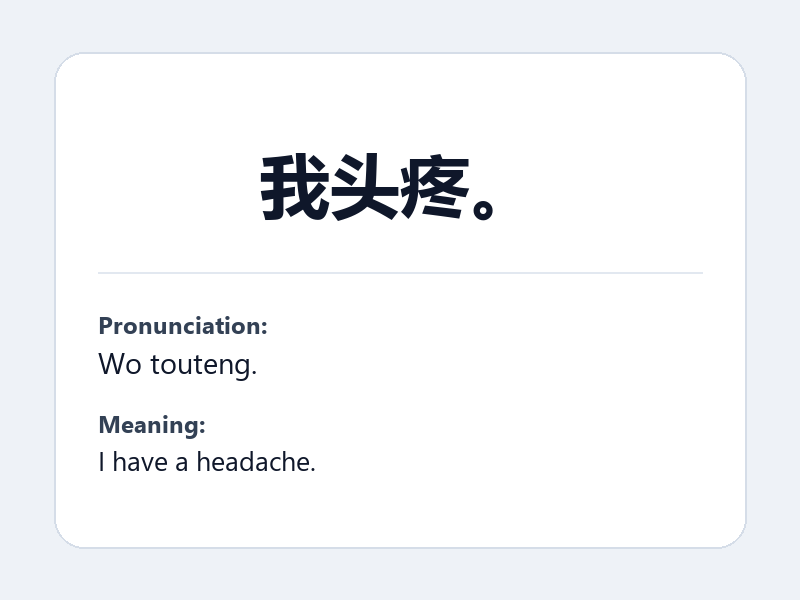
Use it when: Your head hurts.
我头疼。
Pinyin: Wo touteng.
I have a headache.
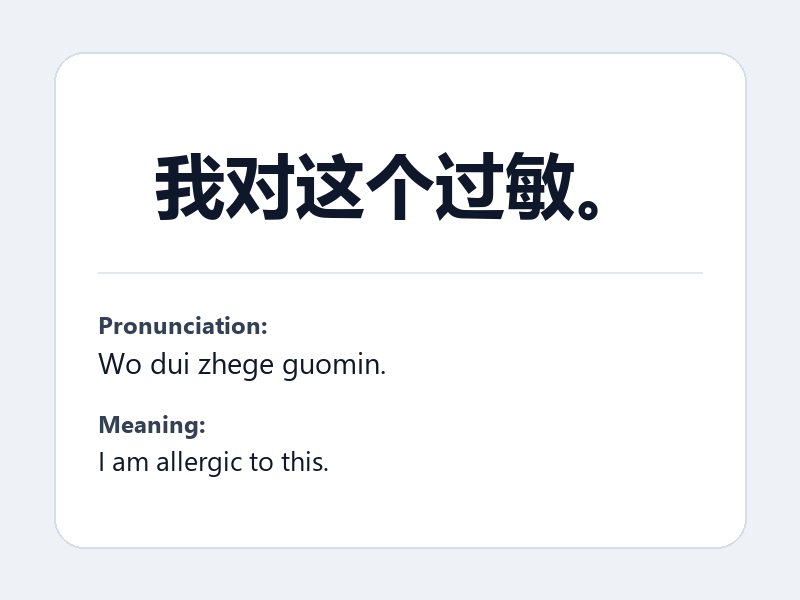
Use it when: You have an allergy.
我对这个过敏。
Pinyin: Wo dui zhege guomin.
I am allergic to this.
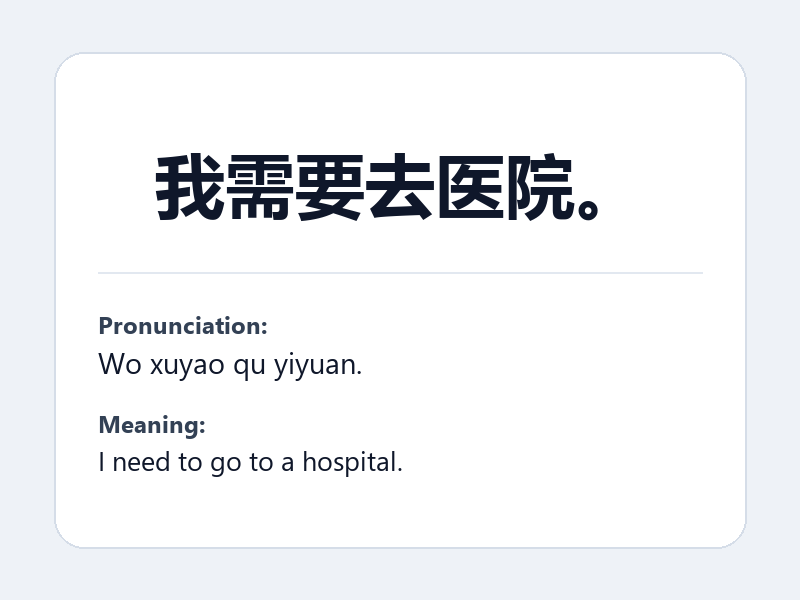
Use it when: You need a hospital.
我需要去医院。
Pinyin: Wo xuyao qu yiyuan.
I need to go to a hospital.
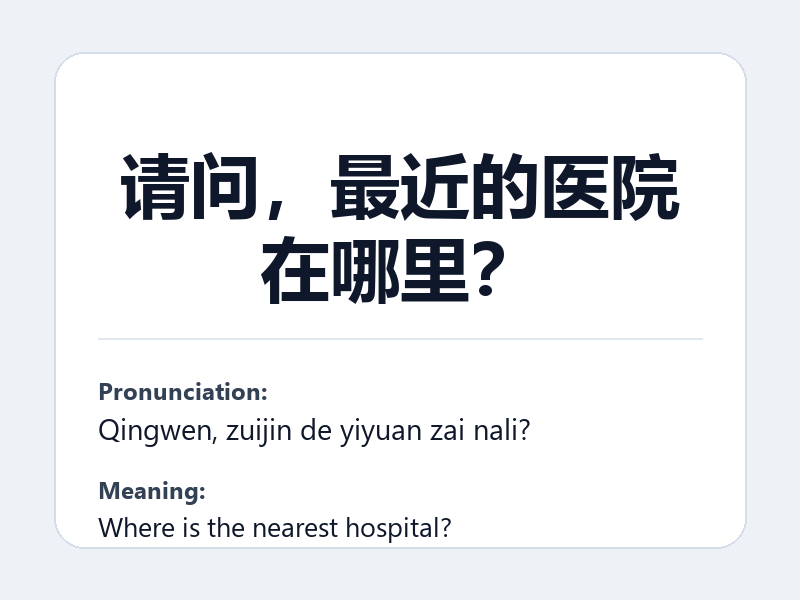
Use it when: You need directions.
请问,最近的医院在哪里?
Pinyin: Qingwen, zuijin de yiyuan zai nali?
Where is the nearest hospital?
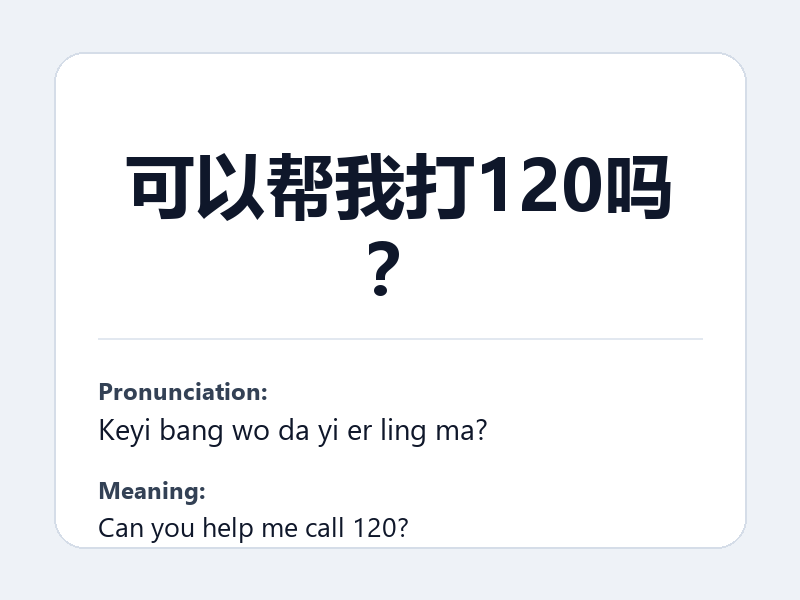
Use it when: You need someone to call emergency medical help.
可以帮我打120吗?
Pinyin: Keyi bang wo da yi er ling ma?
Can you help me call 120?
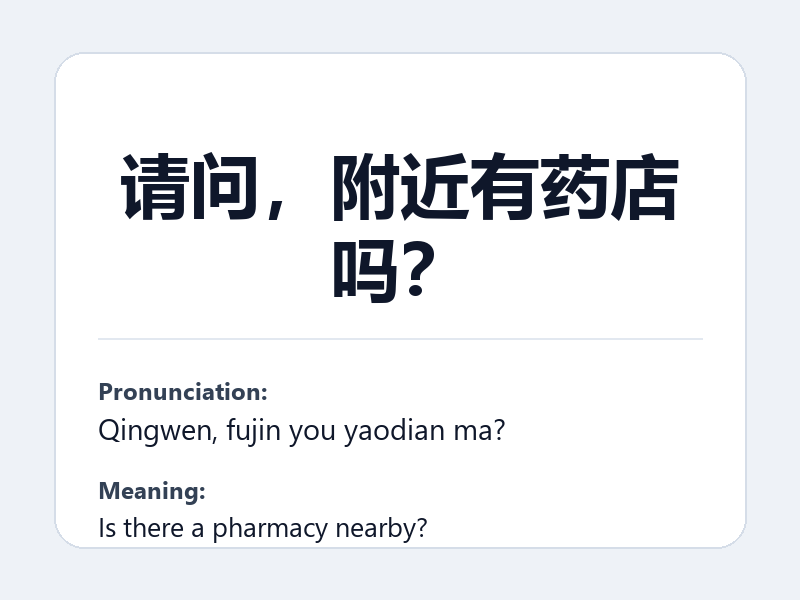
Use it when: You need a pharmacy.
请问,附近有药店吗?
Pinyin: Qingwen, fujin you yaodian ma?
Is there a pharmacy nearby?
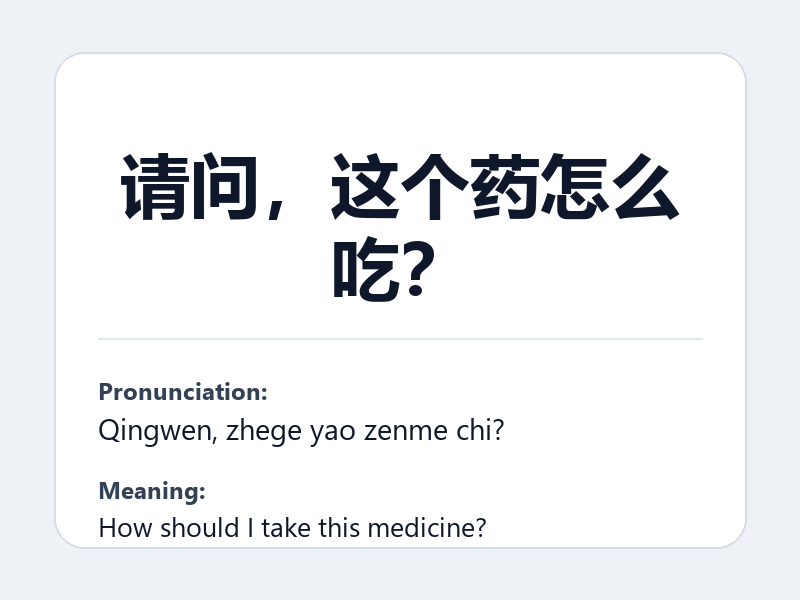
Use it when: You need dosage instructions explained.
请问,这个药怎么吃?
Pinyin: Qingwen, zhege yao zenme chi?
How should I take this medicine?
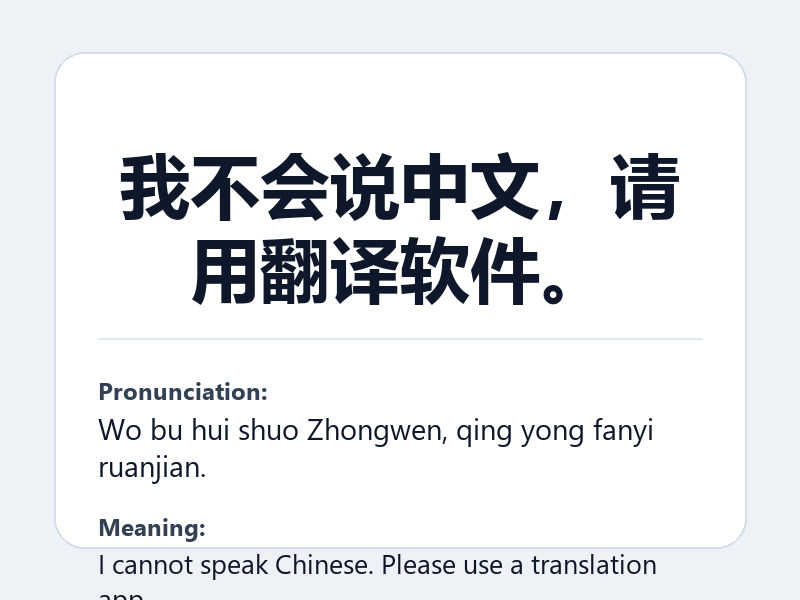
Use it when: You need translation help.
我不会说中文,请用翻译软件。
Pinyin: Wo bu hui shuo Zhongwen, qing yong fanyi ruanjian.
I cannot speak Chinese. Please use a translation app.
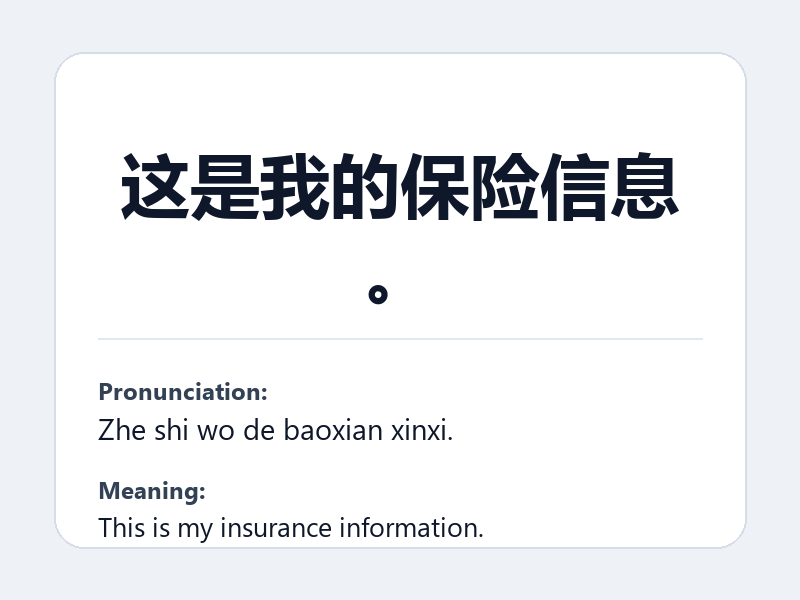
Use it when: You need to show insurance information.
这是我的保险信息。
Pinyin: Zhe shi wo de baoxian xinxi.
This is my insurance information.
Where medical wording can fail
- If the situation feels serious, do not spend time perfecting language. Ask hotel staff, airport staff, police, or a nearby adult to call emergency help.
- A pharmacy may not be able to diagnose you. For severe symptoms, go to a hospital or clinic.
- Keep allergies and medication names written clearly. Translation mistakes can matter here.
FAQ
Is this medical advice?
No. It is only a communication aid. For urgent symptoms or uncertainty, seek professional medical help.
Should I show symptoms in English or Chinese?
Show the Chinese phrase first, then use a translation app for details. If you have allergies or a medical condition, prepare those details before traveling.
Before looking for medicine: save the symptom, allergy, pharmacy, and hospital cards. In health situations, simple written Chinese is safer than guessing words.
Next: For food-related risks, keep the food allergy guide ready.