Tip: Save the phrase cards you may need before you go out. If a translation app fails, you can show the image directly to a hotel clerk, driver, cashier, restaurant staff member, or police officer.
Start here: After a traffic accident, check injuries first, call 120 if medical help is needed, call 122 or 110 for accident handling, and do not leave before the next step is clear.
A traffic accident can involve taxis, ride-hailing cars, private cars, scooters, shared bikes, or pedestrians. The confusing part for visitors is knowing whether it is okay to leave. If there is injury, dispute, property damage, or unclear responsibility, slow down and get official or staff help.
First, know this
- Injuries come first. Call 120 if anyone needs medical help.
- 122 is commonly used for traffic accidents. In some cities, 110 may also handle or redirect traffic accident help.
- Do not leave too quickly if there is injury or dispute.
- Ride-hailing order records, taxi plate numbers, photos, and location matter.
What to do before anyone leaves the scene
- Move out of active traffic if it is safe to do so.
- Check whether anyone is hurt and call 120 if needed.
- Call 122 or 110, or ask hotel/traffic/station staff to help.
- Take photos of vehicles, plates, location, damage, and ride order details.
- Ask what you should do before leaving.
Prepare these before taking rides
- Use traceable transport when possible: official taxis, ride-hailing apps, hotel-arranged cars.
- Save your ride order and driver information until the trip is fully finished.
- Carry travel insurance details.
- Keep your passport and hotel address accessible.
- Know a simple phrase for injury and accident.
Accident-scene mistakes to avoid
- Leaving because you are embarrassed or do not want trouble.
- Paying cash privately without records in a serious or unclear accident.
- Not photographing the license plate or ride order.
- Standing in the road while trying to translate or argue.
Accident lines worth saving
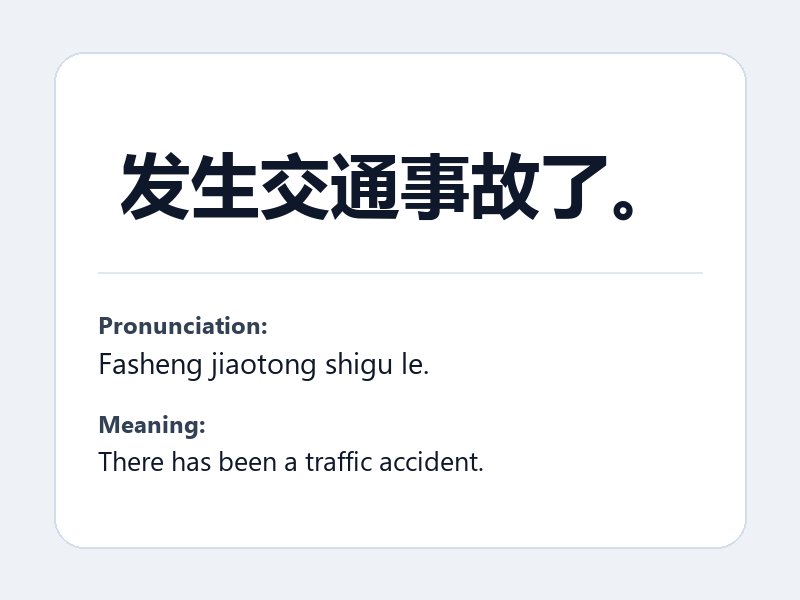
发生交通事故了。
Pronunciation: Fasheng jiaotong shigu le.
There has been a traffic accident.
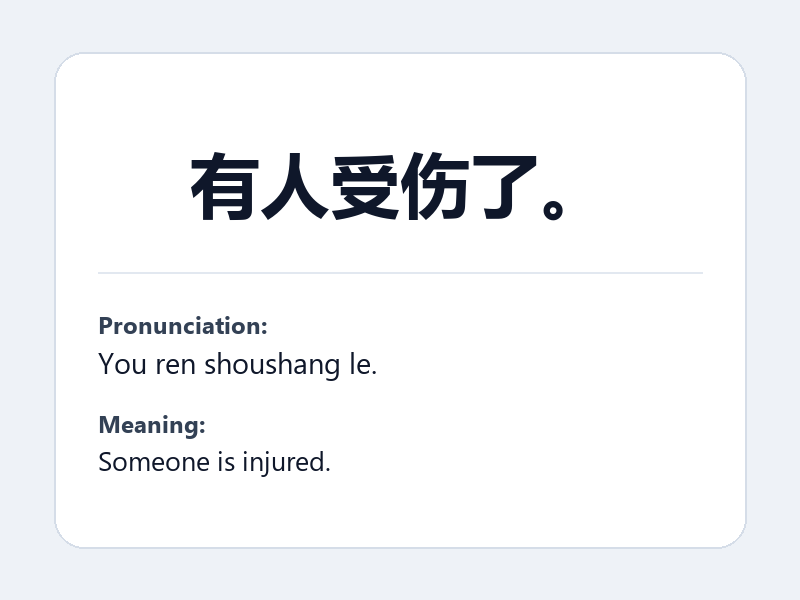
有人受伤了。
Pronunciation: You ren shoushang le.
Someone is injured.
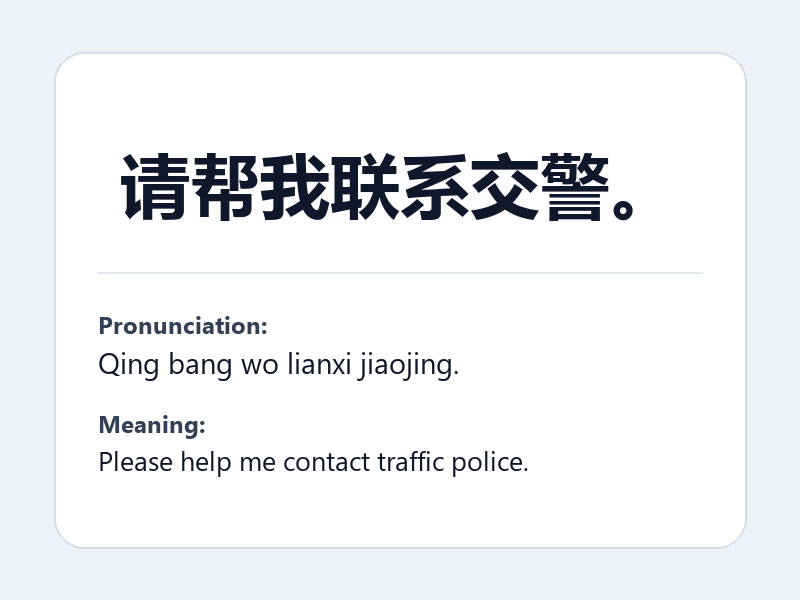
请帮我联系交警。
Pronunciation: Qing bang wo lianxi jiaojing.
Please help me contact traffic police.
FAQ
What if it is a small scratch?
If everyone agrees and there is no injury, locals may handle minor issues differently. As a visitor, keep records and avoid private cash settlements if anything feels unclear.
What if I am in a DiDi ride?
Keep the order record, driver details, route, license plate, and in-app support record. Ask the platform, hotel, or police/traffic staff for help if needed.
Important: This page is a practical travel guide, not legal, police, or medical advice. In a real emergency, use local emergency services and ask hotel staff, station staff, airport staff, police, hospital staff, or your embassy/consulate for help.
Before taking a ride: save your hotel address, traffic accident phrase, and emergency contact. If there is a crash, document first and leave later.
Next: Go back to Emergency Help, or review what to do if you lose your passport or phone.